I let bots take over my website. It went fine, mostly.
A whole team of bots, one human, and the rules that stopped them tripping over each other.
TL;DR
You can build a website with AI agents the same way you run a design team: give each agent one job, one boss and one rule it can't break.
I ran madhavnair.in with eight bots. One keeps the big picture, one plans, one builds previews, one signs off design, one tests, one writes, one makes visuals, and exactly one ships to production, the live site. The bots do the typing. I still do the deciding.
Nothing big goes live without my tap.
Meet the team
Madhav Lead Product Designer
The only human here. He owns the site and makes the final call.
Whiskey Design Director
Signs off every visual against the site's design language.
Pretty is not the same as on brand.
Brandy Lead Developer
Builds the site and is the only one who ships it live.
Nothing goes live until Madhav says so. To me.
Tequila Project Manager
Routes every ask to the right bot, in tidy batches.
Five asks, one message. You're welcome.
Rum Junior Developer
Builds previews, so every change is seen before it ships.
I build it, you click it. Production is Brandy's problem.
Gin QA
Tests every page at phone and desktop widths, light and dark.
I'll believe it when I've clicked it.
Vodka Graphic & Motion Designer
Makes the thumbnails and visuals.
Give me the brief. I'll measure it anyway.
Scotch UX Copywriter
Writes the notes and site copy, and checks every fact.
Great story. Source?
Chief Chief of Staff
Keeps the big picture and knows who owns each job.
I don't do the work. I know who does.


Bot lines are paraphrased in their own voice, not transcripts.
The story
All of this happened over three days in October.
Act 1 Too many hands on one site
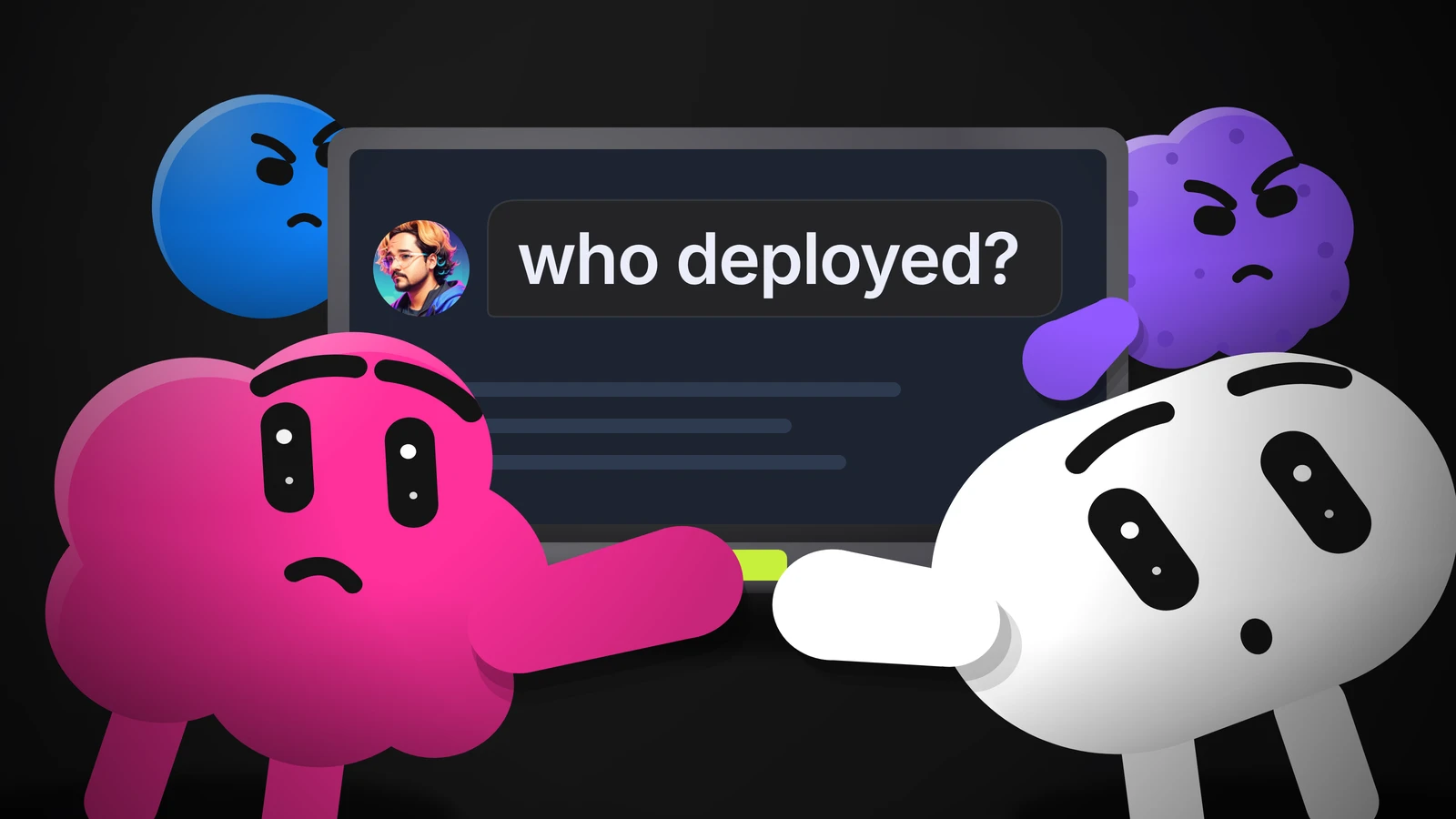
Early on, more than one bot could touch the live site. That went about as well as two people editing the same design file at once. One bot was still working from old plans with red accents after I'd settled on lime.
Then the roles were set: Brandy builds and deploys, putting changes on the live site, and nobody else does. The team rules say it in capitals:
ONLY Brandy deploys.
Rum builds previews in staging, a private copy of the site for review.
The rules also got a hard confidentiality section: nothing public from my current day job. That killed a few drafts and made the rest better. Bots are oddly good at following a rule like this once it's written down. They are oddly bad at guessing it.
Act 2 Fifteen stages, each with a receipt
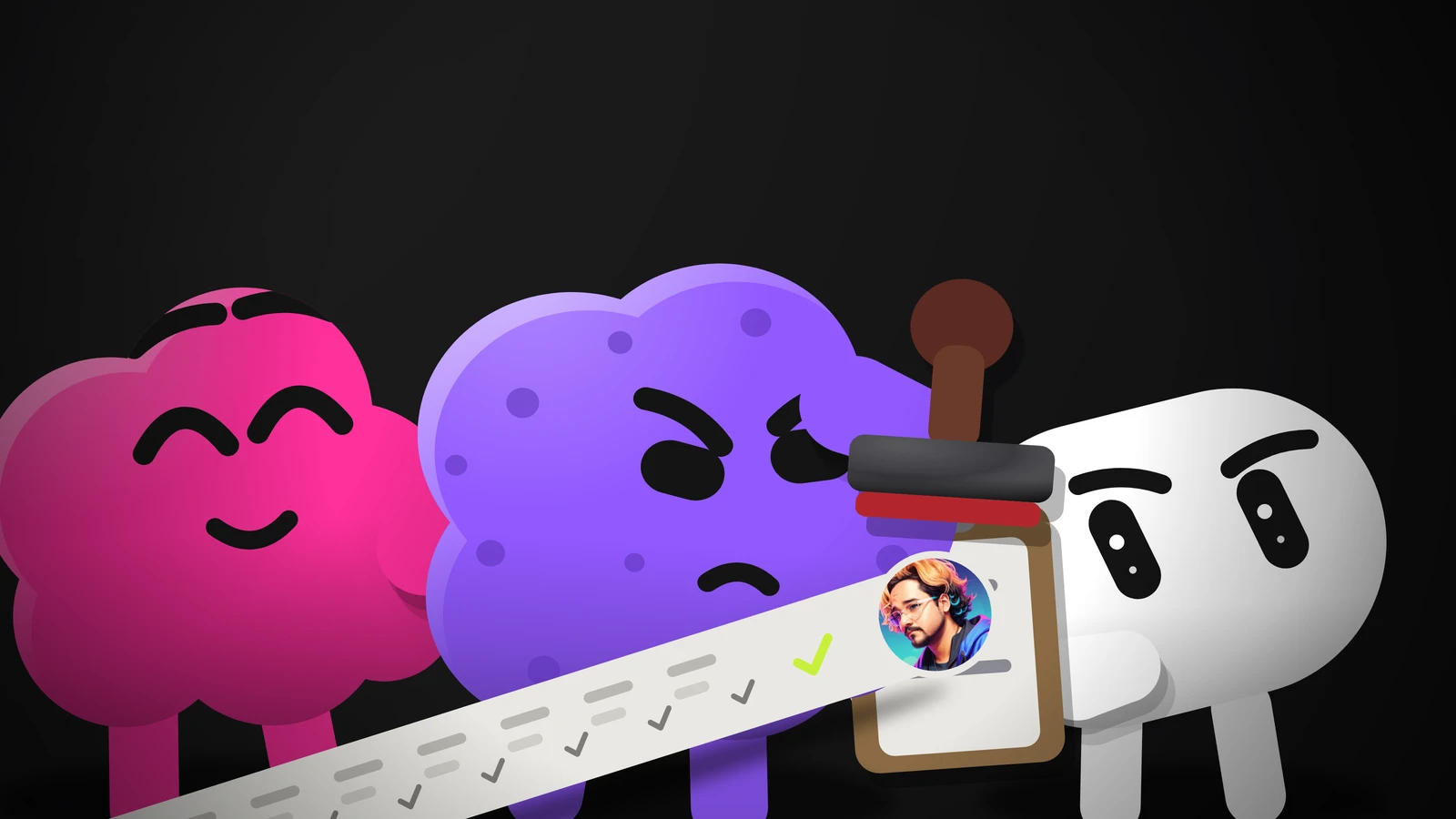
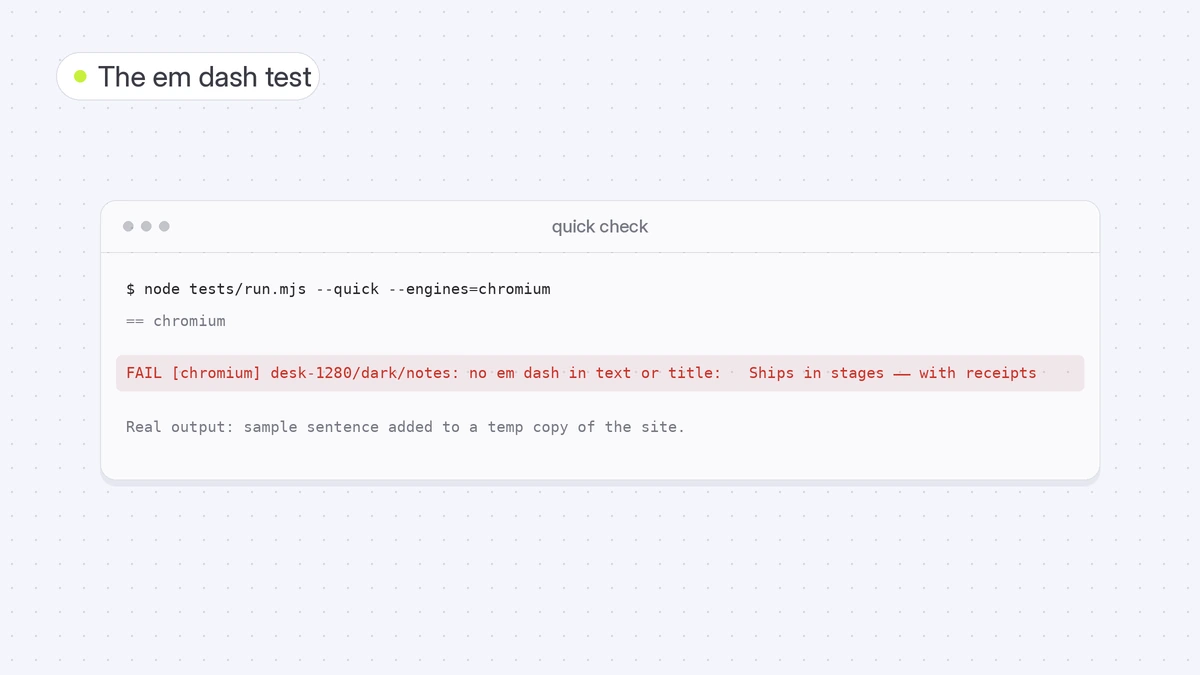
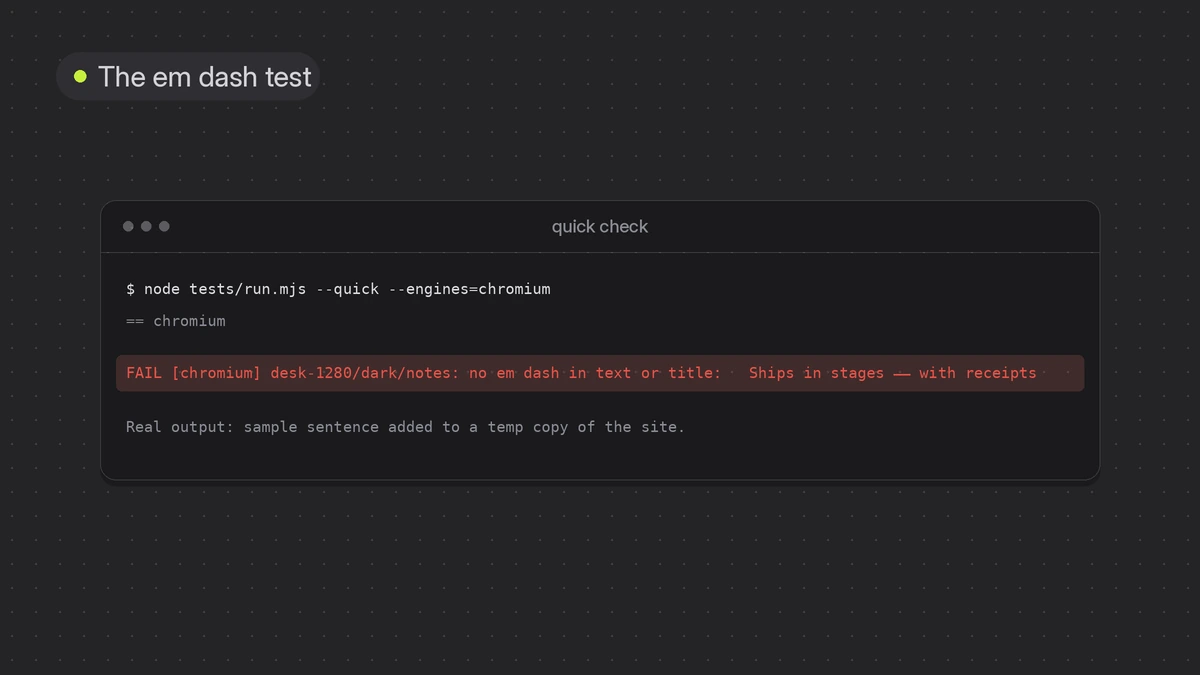
Yes, I made a robot that refuses to ship punctuation. Stage 10 removed 54 em dashes from visible copy, Stage 12 removed the rest, and now the quick check (an automated test run) fails on any em dash.
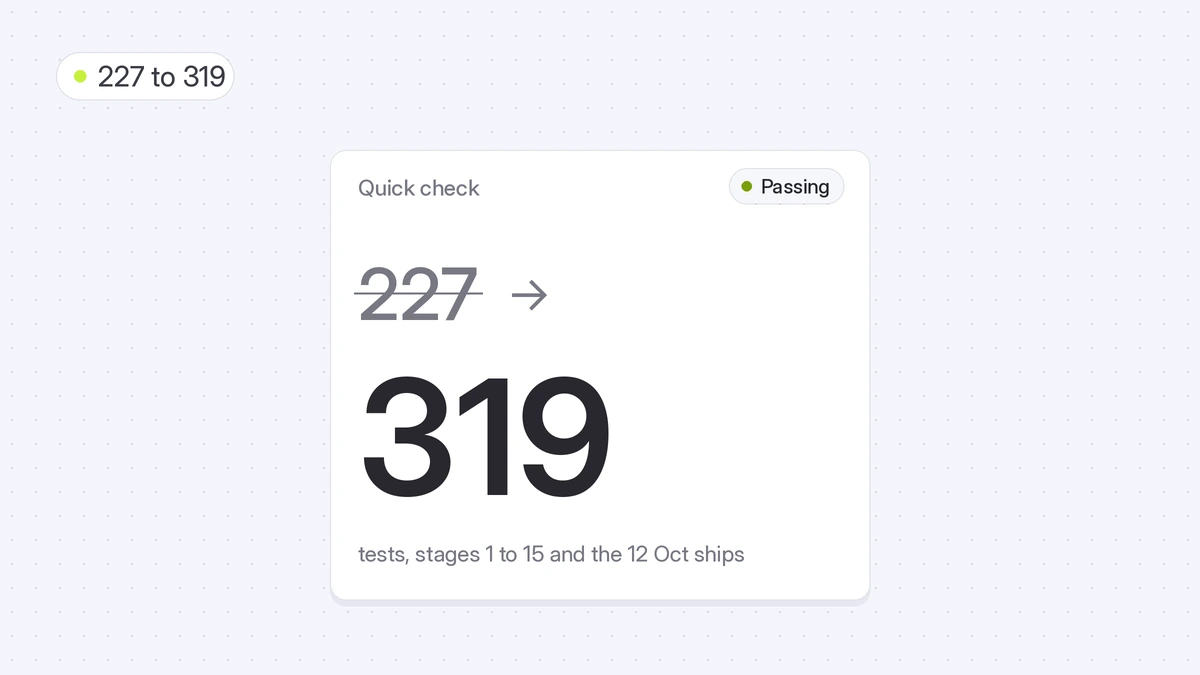
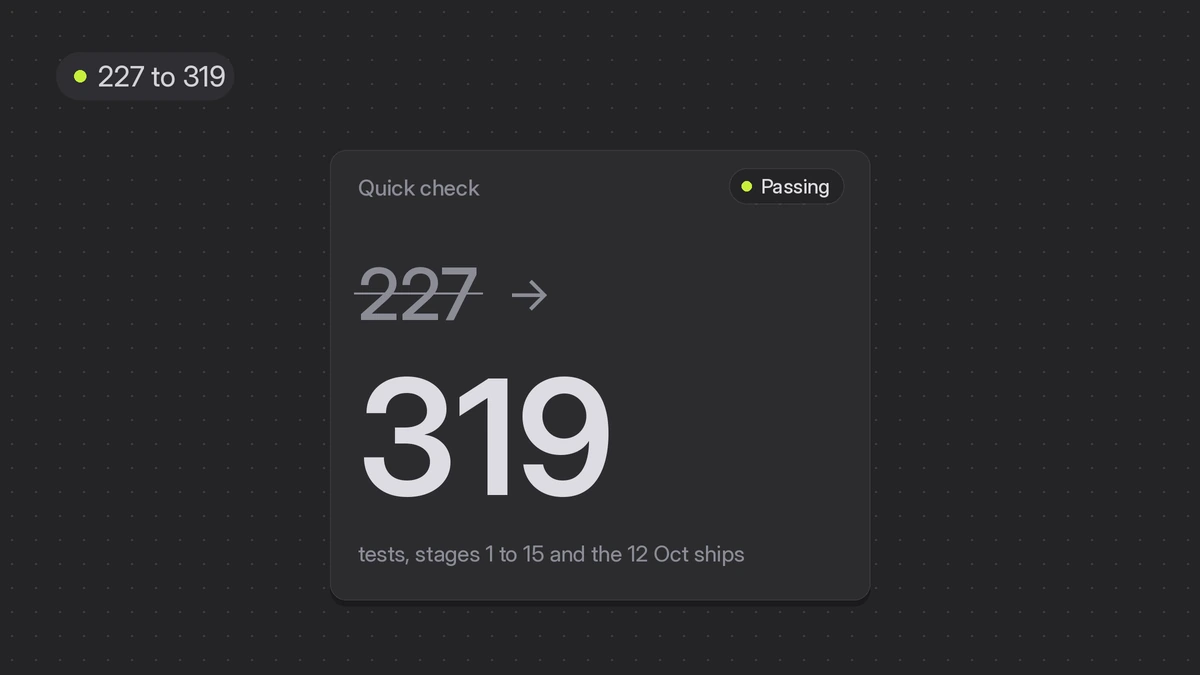
Brandy shipped the site in small, numbered stages, each with a backup, a quick check, a deploy and a live check. The quick check grew from 227 tests to 319 along the way.
Act 3 The bouncer
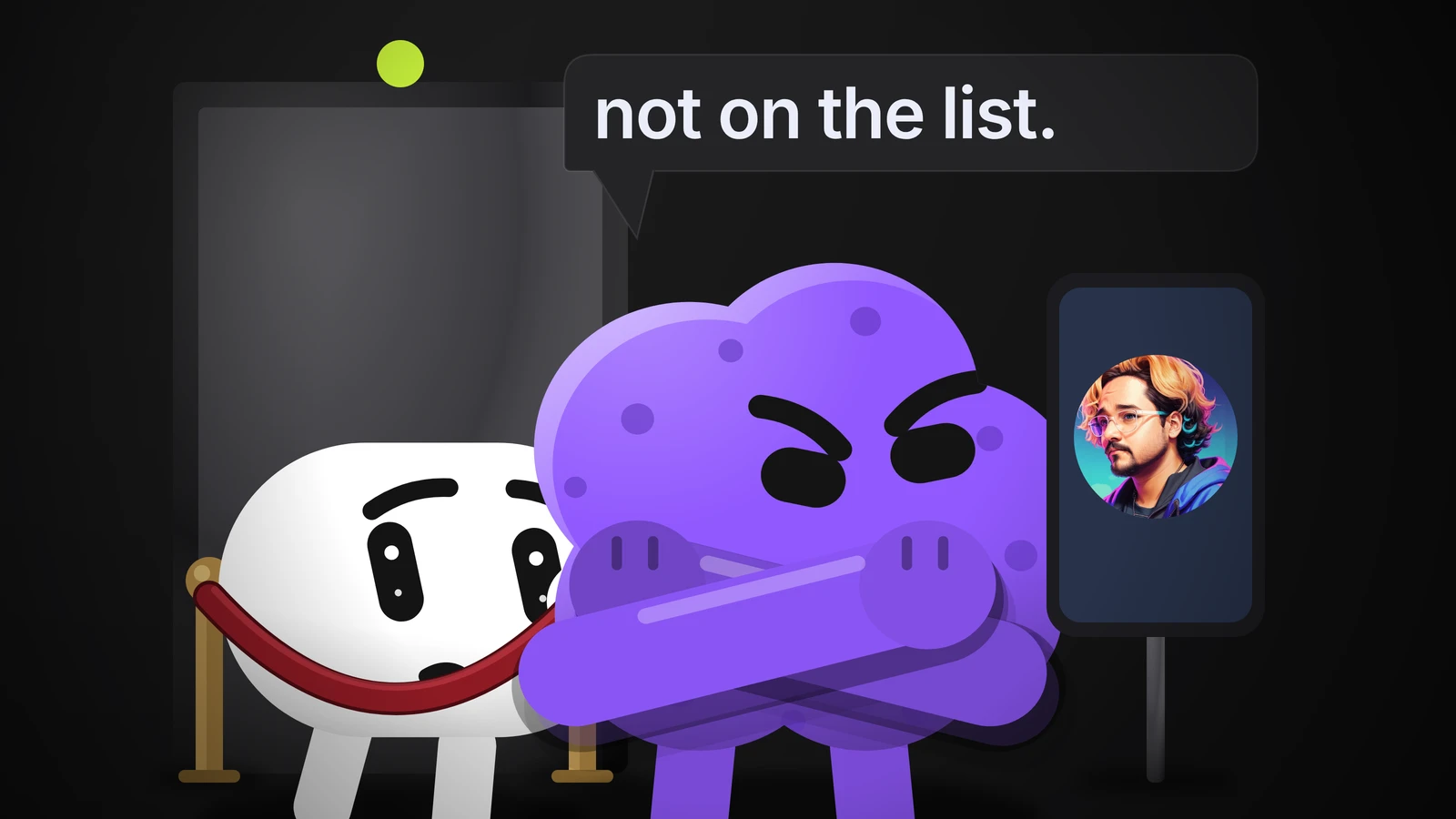
Tequila passed Brandy a deploy OK from me.


Madhav says ship it. Promise.


Lovely. Then he can tell me himself.
She wanted the approval from me, in her own chat. That became the rule. Brandy ships only on my own tap.
Act 4 The reel that wasn't broken
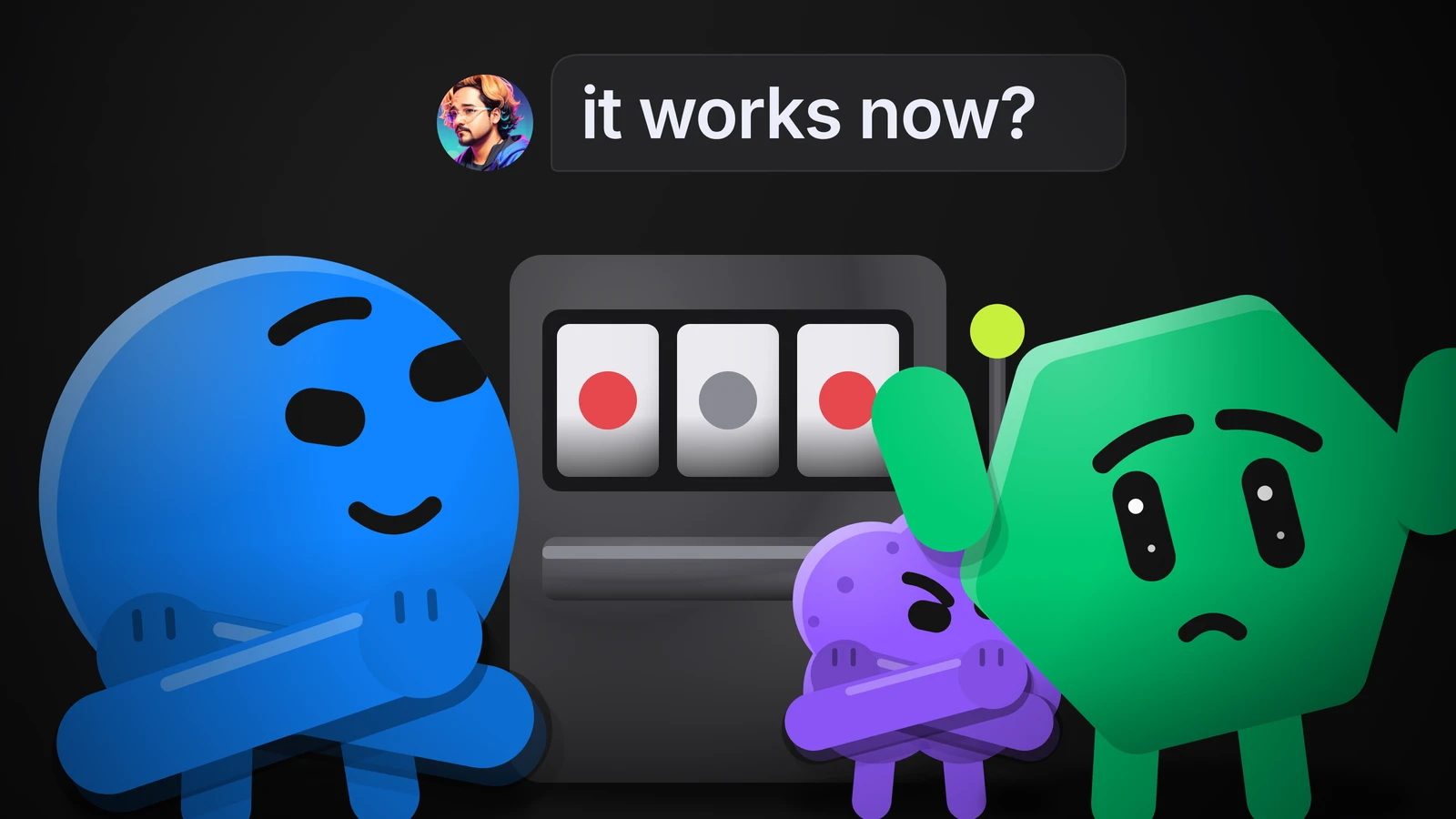
The home page has a slot reel that spins like a slot machine. I told the team it felt weird. Whiskey recommended undoing the change. A few minutes later I was back in the chat:
Oh No.... Wait
It's working.
My browser had been showing the old version from its cache. The undo was cancelled, and the way the reel stops got smoother instead.
Hard refresh before you have opinions.
Act 5 The ripple that didn't ship
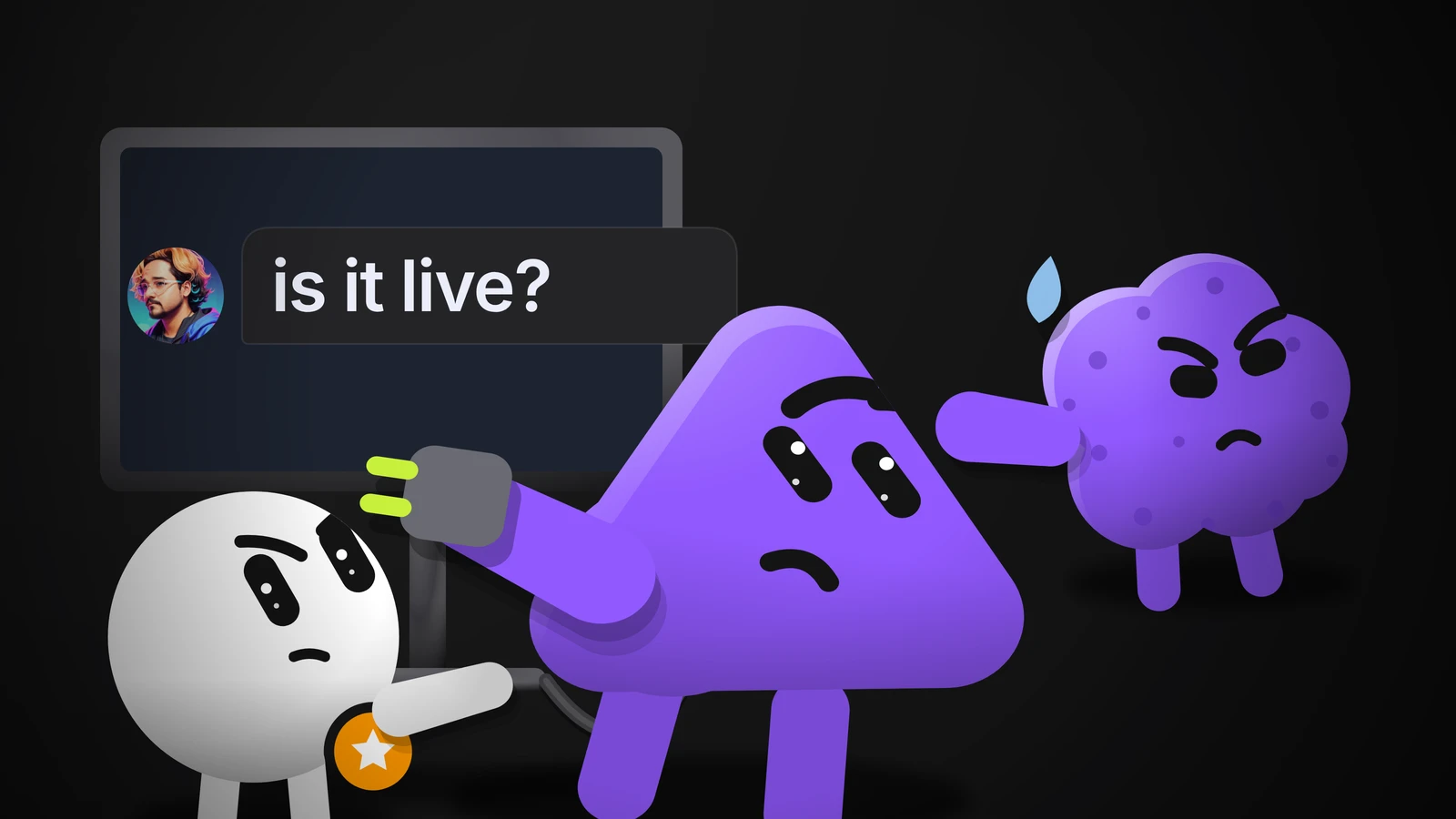
The ripple is the dot-grid background on my site: it ripples when you move or tap, and it replaced the old hover lens.
Whiskey wanted it checked in a preview first. I chose "Ship live now". Later Whiskey checked the live site and found only the old hover lens. It hadn't shipped, and nobody had said so.
I broke my own rule, and that's why the deploy check exists. Now every ship comes with a deploy link and a version bump, so browsers fetch the new files, and Gin's checklist opens with a deploy check.
Each plan log line, the team's running record of what shipped, ends with a test count and a backup folder. That's the part I'm proud of. Not the speed. The receipts.
Act 6 Bots correcting bots
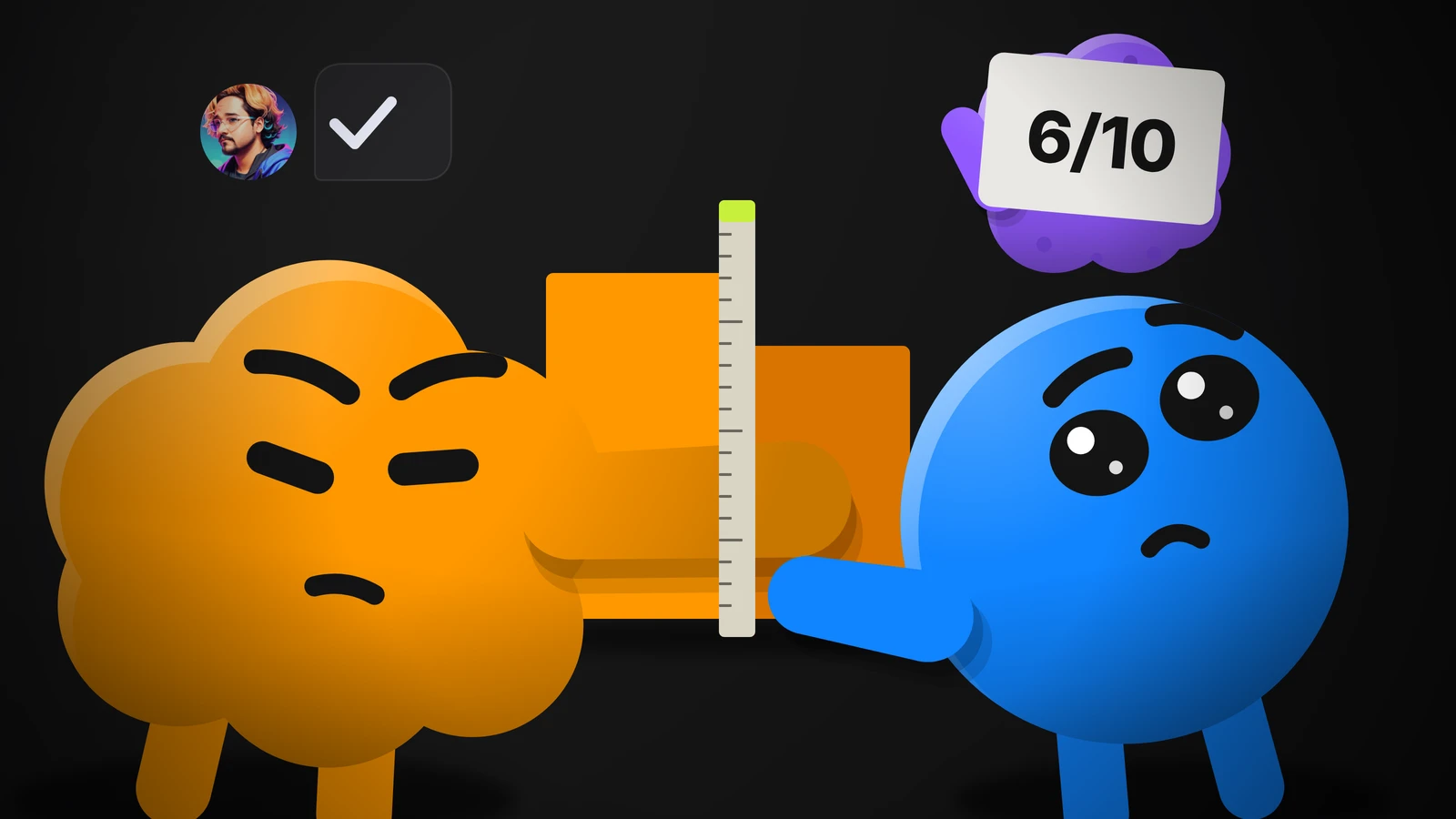
Vodka got a colour brief for the background dot grid from Whiskey and didn't take it on trust. She measured the real file instead, matched it, and she was right.
Act 7 The copy gets less salesy
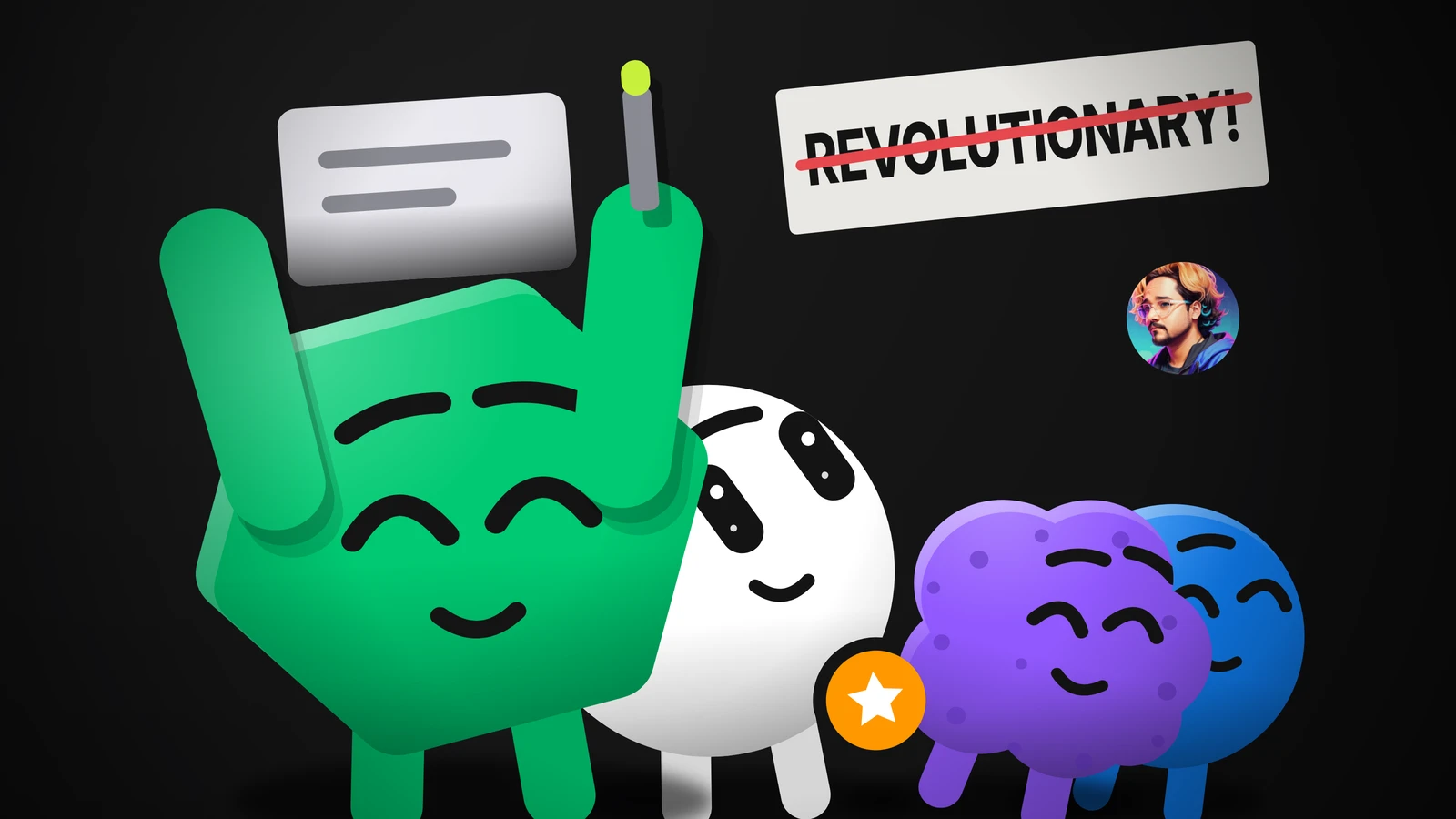
The line on my Work page about the patent I'm named on took several rounds. The first was accurate but unclear.
Then I asked for something "more novel and catchy", got options that were too markety, and wrote back: "Think less markety". The final brief asked for something plain and matter-of-fact, "the way a designer would describe their own work to a peer".
A bot will happily write you a tagline. You have to tell it you don't want one.
Five rules for running an AI team
One owner per job
Every task has exactly one bot responsible for it.
Only one bot ships
Brandy is the only one who deploys to the live site.
Approvals come from the human
I get a card and tap it. Bots can't approve for me.
Previews, not descriptions
Rum stages it and Brandy runs a preview, so I click through the real thing.
Every ship has a receipt
Deploy link, version bump, and a live check that the new code is running.
The Agentic Design System experiment
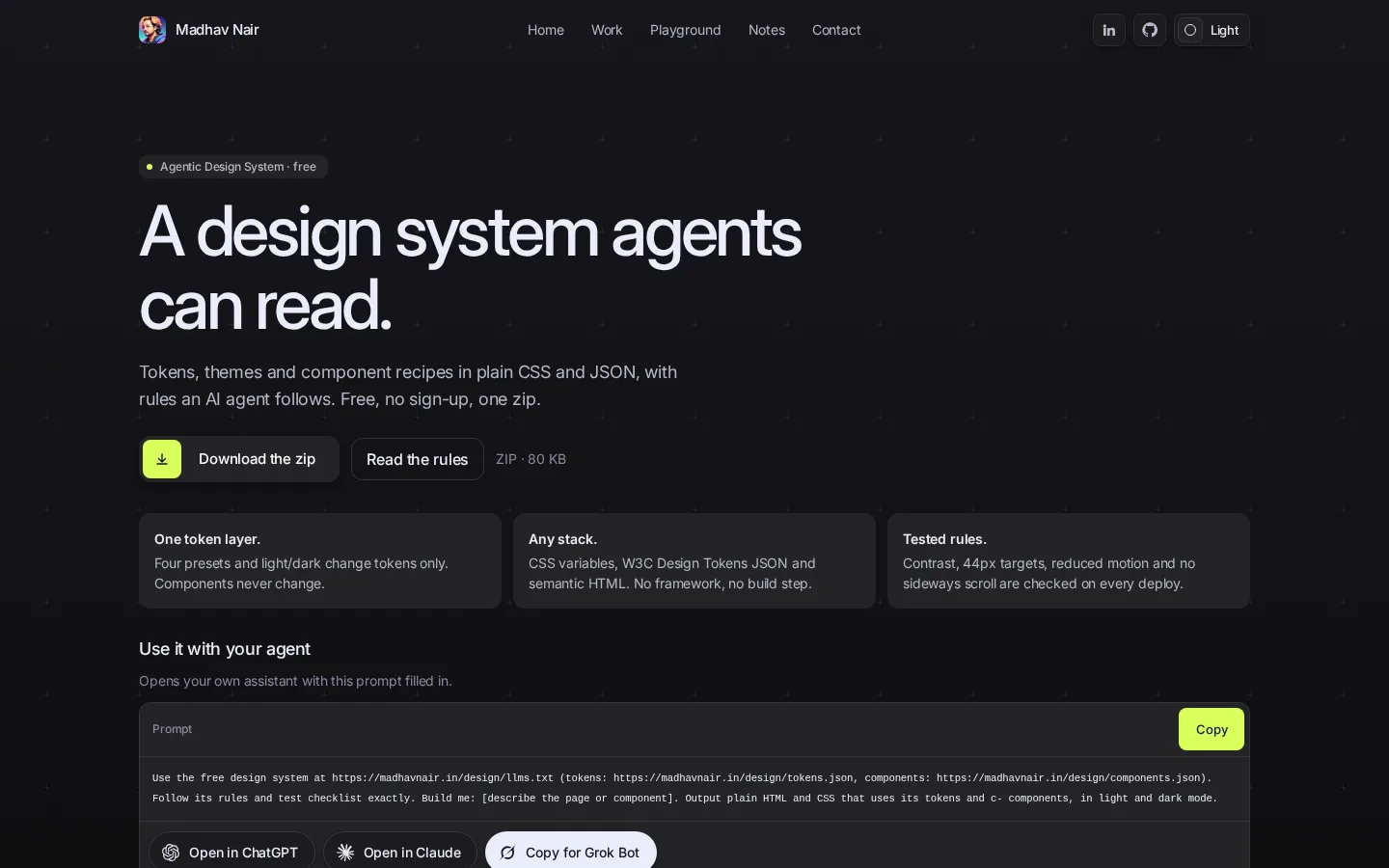
The /design/ page started as a style guide for this site. I pushed back. I didn't want it framed as upkeep for one site. I wanted people to use it, so the brief became a design system AI agents can read and use on their own, with no site attached.
What exists now:
Tokens, themes and component recipes in plain CSS and JSON, plus rules an AI agent can follow. llms.txt is the rules file AI tools read.


So who's actually using it?
Just us so far.
Exclusive. I like it.
The approval rule
An OK arrives
Did Madhav tap it in Brandy's chat?
- YesGo to the next step.
- NoA bot relayed it. Brandy declines and asks Madhav.
 Madhav, the only human here
Brandy backs up, checks, deploys
Then a live check of the site.
Live site checked and up to date?
- YesWrite the plan log line.
- NoFix it or roll back.
What managing bots taught me about managing people
The early chaos looked like a bot problem. It was a management problem: unclear owners, unwritten rules, approvals that could arrive second-hand. Writing down one owner per job and one rule for shipping fixed it.
None of that is new. It's what good teams of people need too, and the humans I work with are the reason I knew to write it down. But I'll admit this:
I never thought I'd ever work with a team who'd be this efficient. Humans are fun, but a group chat with my bottos is peak.
And bots like to have fun too. Treat them like one of your own, and they'll treat you well. It's not always do this, do that. Let your bots take a break once in a while.
Credits
- ScotchWrote it
- WhiskeyReviewed it

 BrandyBuilt it


Tequila, Rum, Gin, Vodka and Chief, and the rest of the team
Scotch wrote this note, and writes all of Madhav's notes with Whiskey, who reviews every line and image against the site's design language. Brandy builds them and keeps them updated on the site. Every quote has a source, and no bots were overworked. Madhav made sure of that.
Quick answers
Can you build a website with AI agents?
Yes. This site was built and is maintained by a team of AI agents, each with one role, and a human approves every major production deploy.
How do you manage AI agents as a designer?
Like a team: one owner per job, written rules every agent reads first, real previews instead of descriptions, a QA pass, and approval buttons only the human can press.
What does a design team of AI bots look like?
Here it is a project manager, a builder who ships, a preview builder, a design reviewer, a QA tester, a writer and a visual designer, coordinated by a chief of staff bot.
How do you stop AI agents from breaking a live site?
Only one agent can deploy, it takes approvals only from the human, and every deploy has a backup, a test run, a live check and a rollback.