
JioImmerse: making mixed reality easy to start
JioGlass was India's first commercial mixed reality glasses. Most people had never used anything like it. The companion app had to make the first hour feel easy.
Overview
Company: JioTesseract. Role: Lead UX designer: UX, UI, research.
Reliance Jio set out to build a mixed reality ecosystem through its subsidiary JioTesseract, where I designed for the XR platform and first party apps. JioGlass, India's first commercial mixed reality glasses, came with a companion app that managed the services and APIs the hardware needed. In phase 2, the app grew to support a phone-based VR headset too, and was rebranded as JioImmerse. I drove the design end to end across both phases.
Phase 1: the challenge
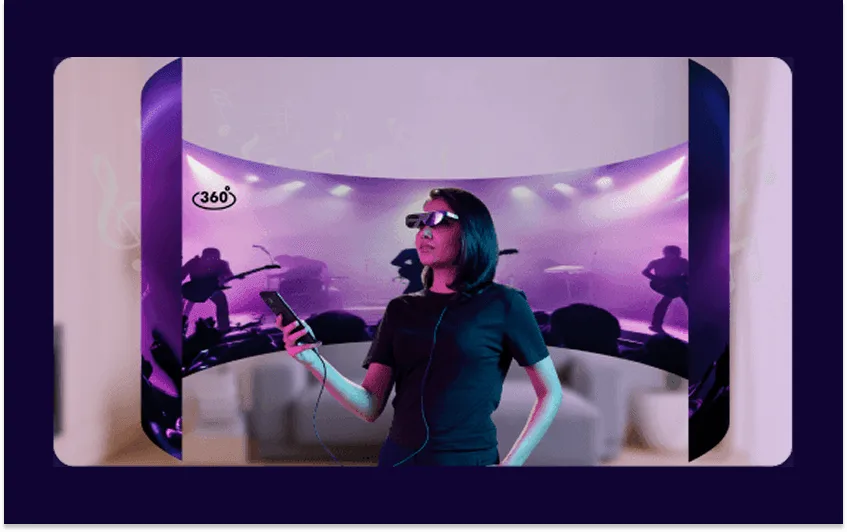
The app had to simplify setup of a complex device for first time users, introduce mixed reality in an intuitive way, and give easy access to MR apps and content. The catch: mixed reality was new for most Indian users, and the hardware had several parts that could confuse even tech savvy people. This was an onboarding problem as much as an app problem.
Research without direct access to users
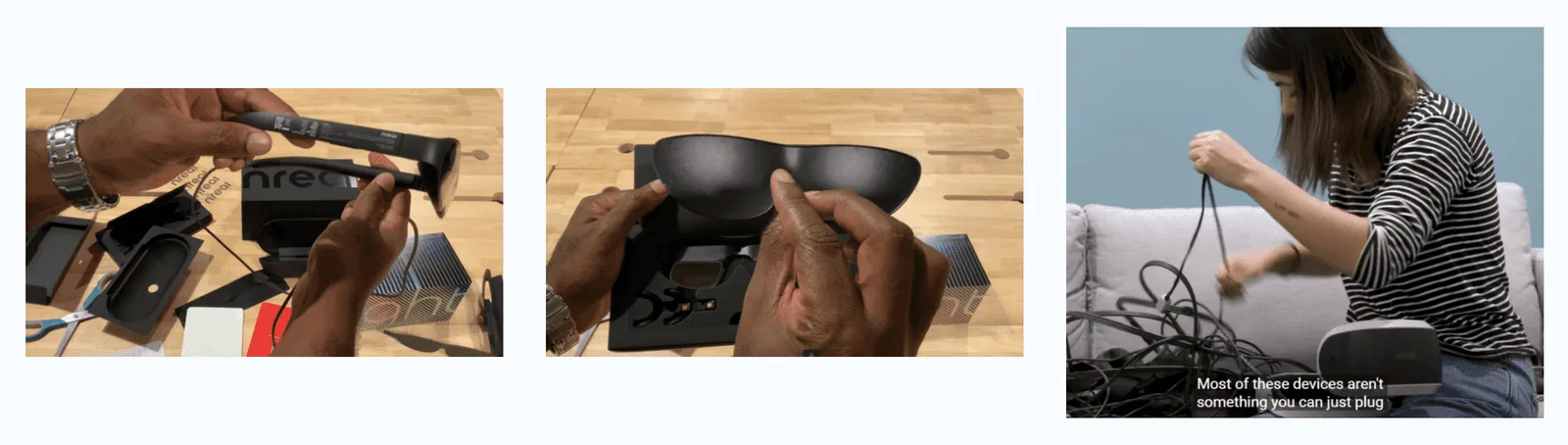
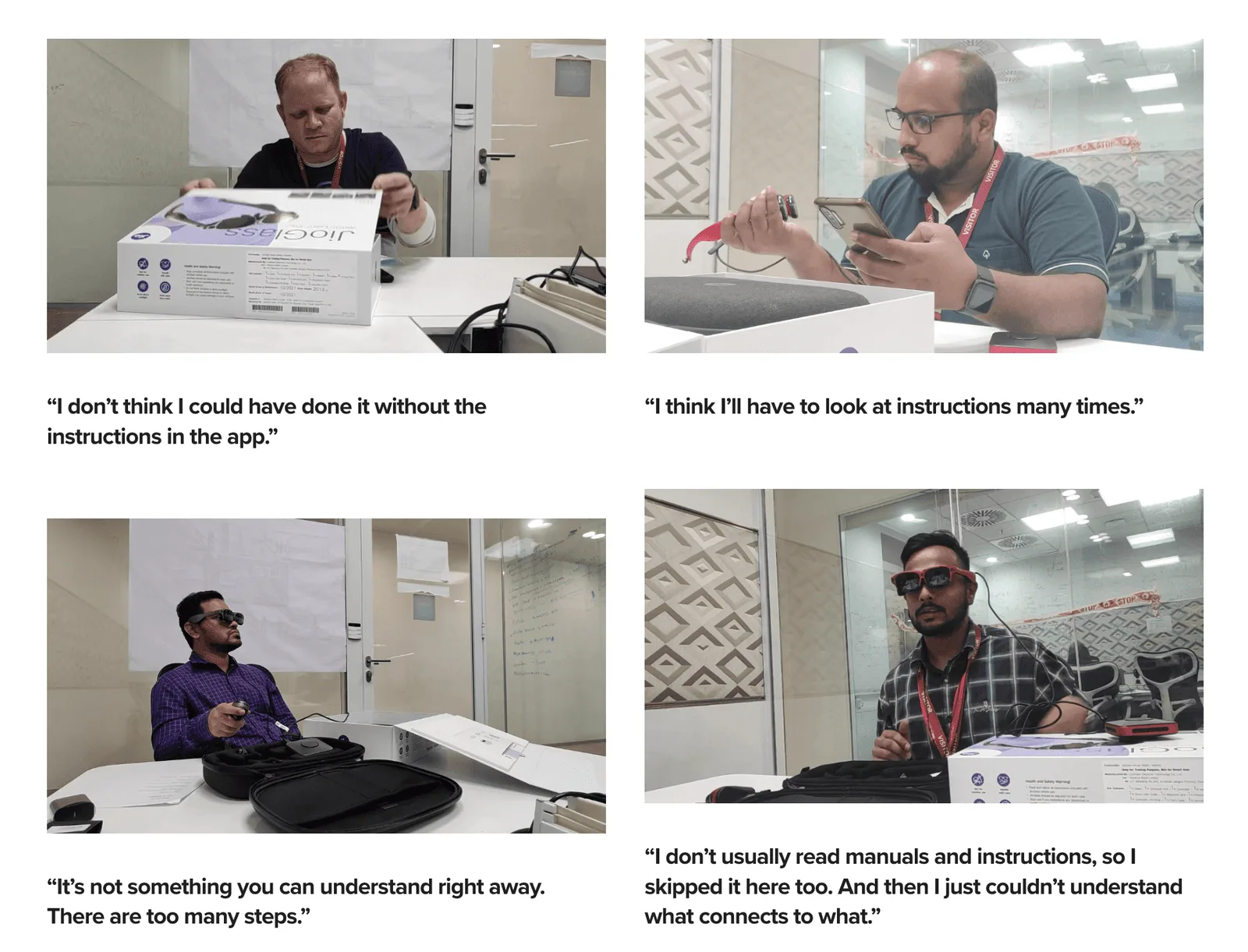
I studied how Oculus, Magic Leap and Nreal onboarded users. Most struggled with onboarding, and setup dampened excitement. With no access to real users early on, I watched online reviews and unboxing videos of similar devices. People got stuck pairing controllers and assembling the device, and many gave up halfway. Internal tests with teammates new to the project confirmed it: even tech savvy people struggled with pairing.
The solution: a one stop companion app
I proposed an app that covered everything a user might need:
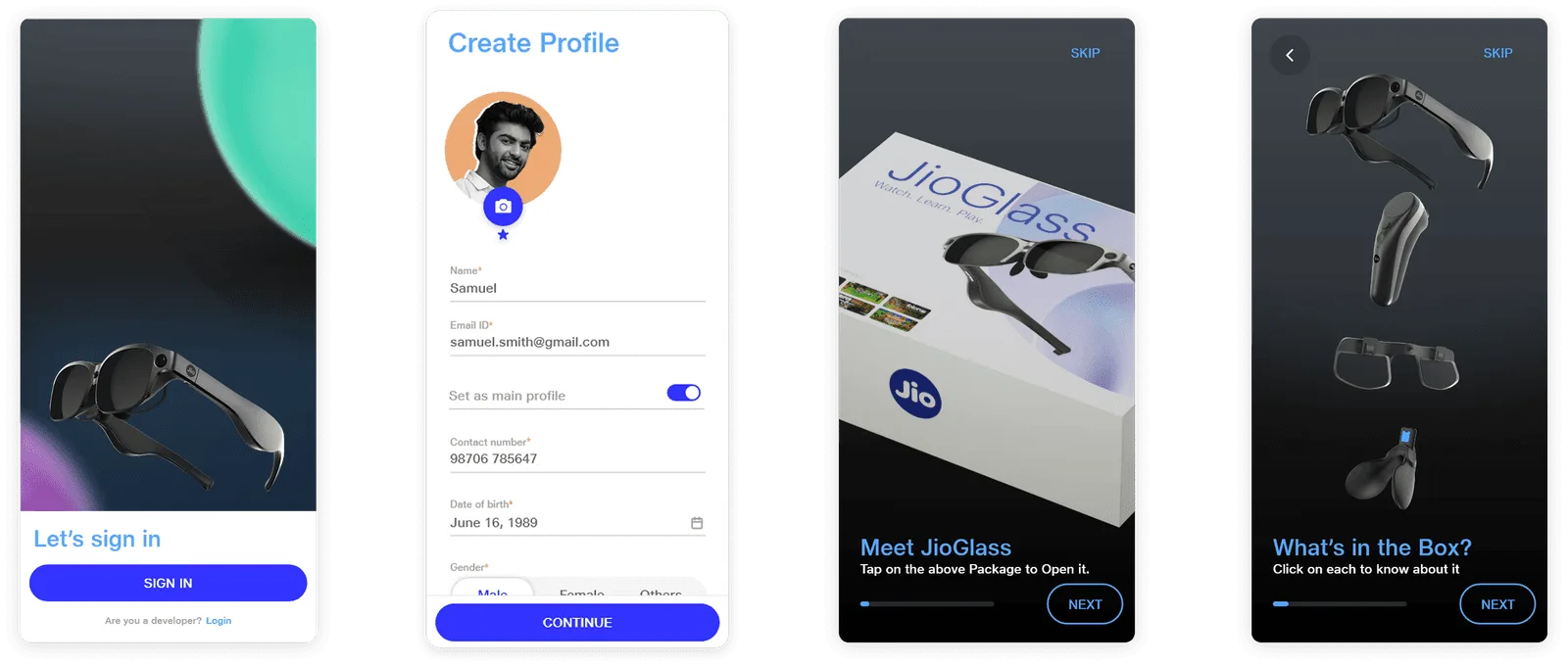
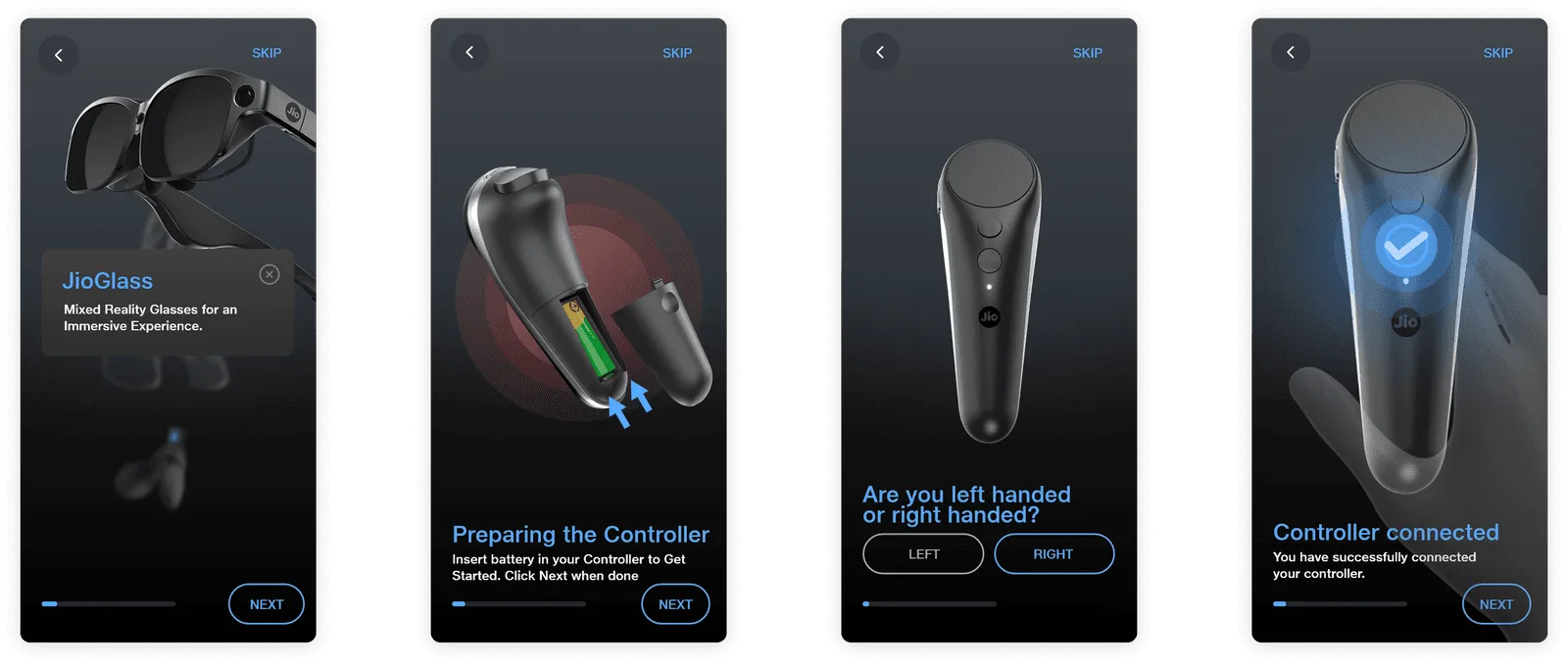
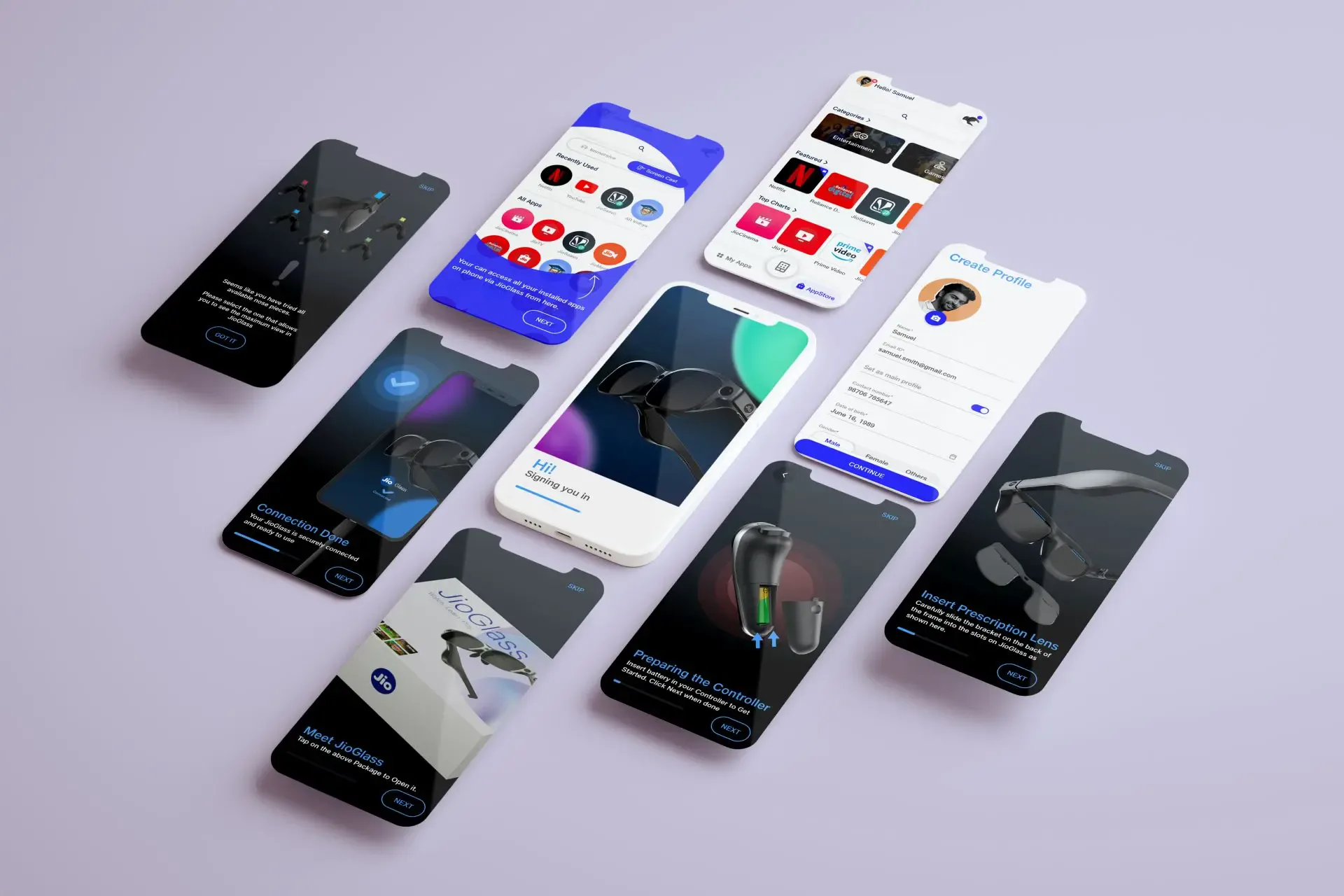
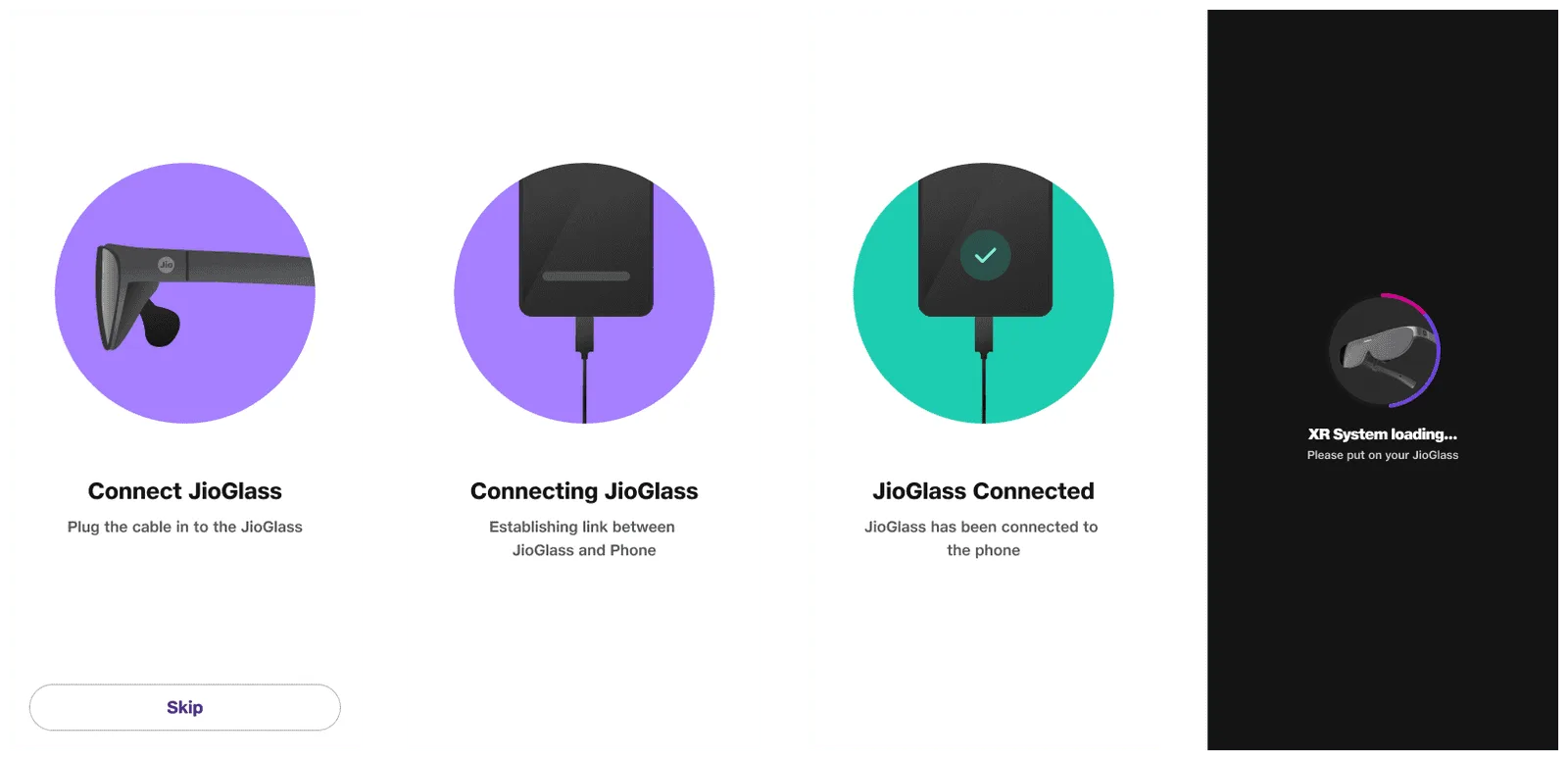
- Guided setup: step by step instructions with visuals and animations.
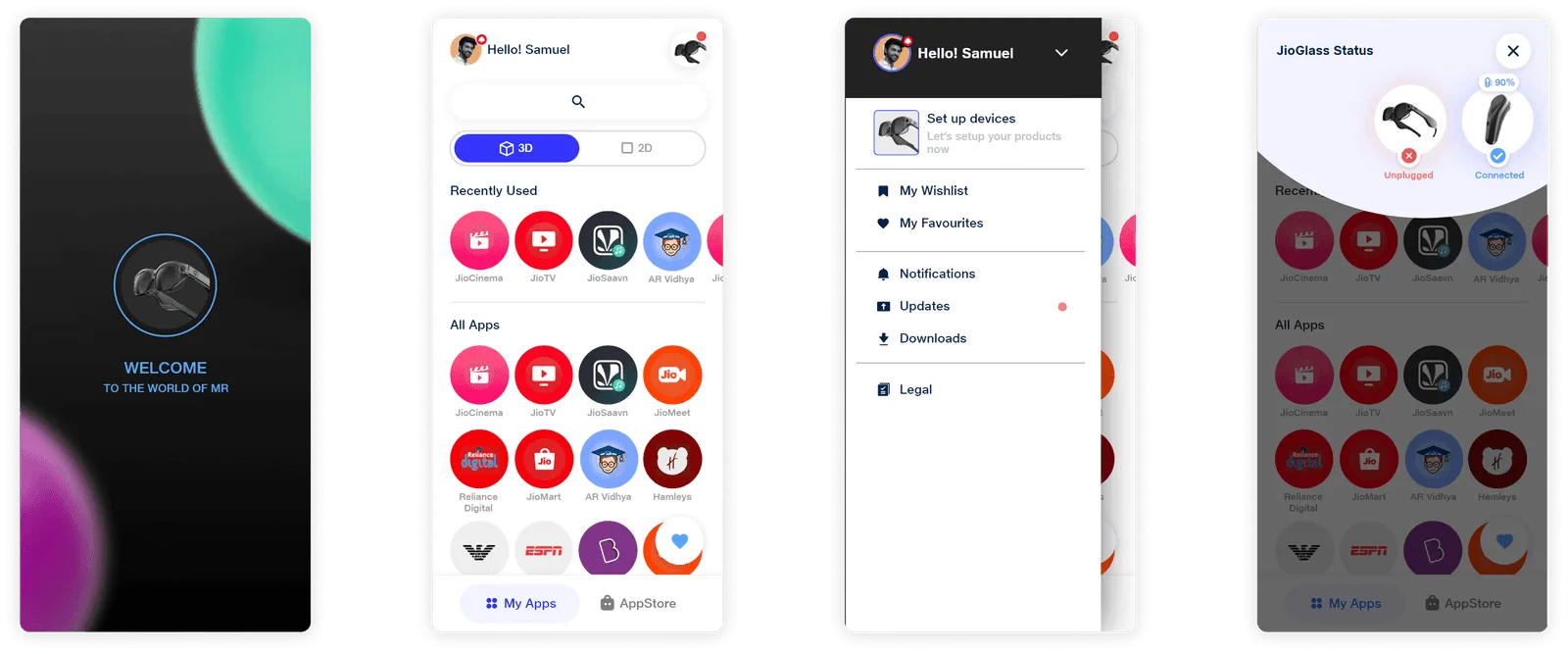
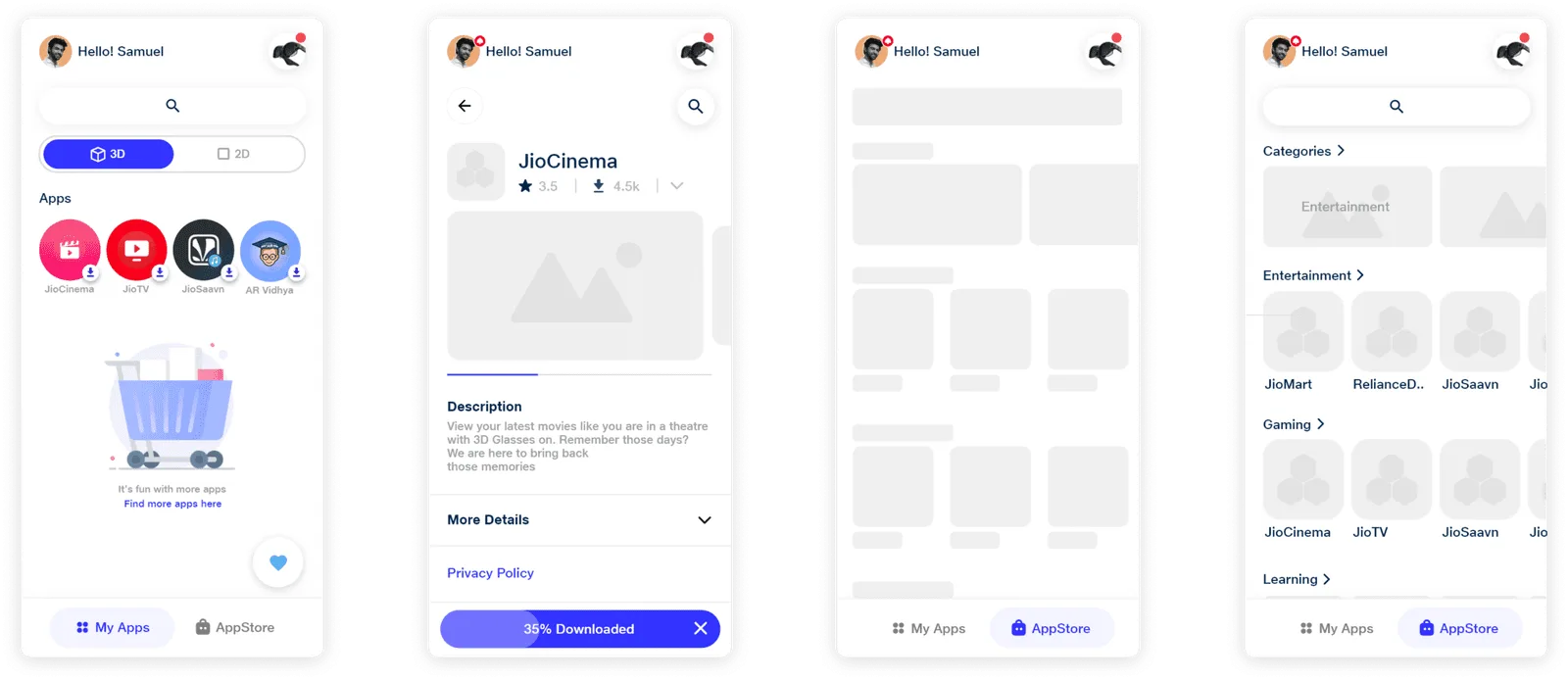
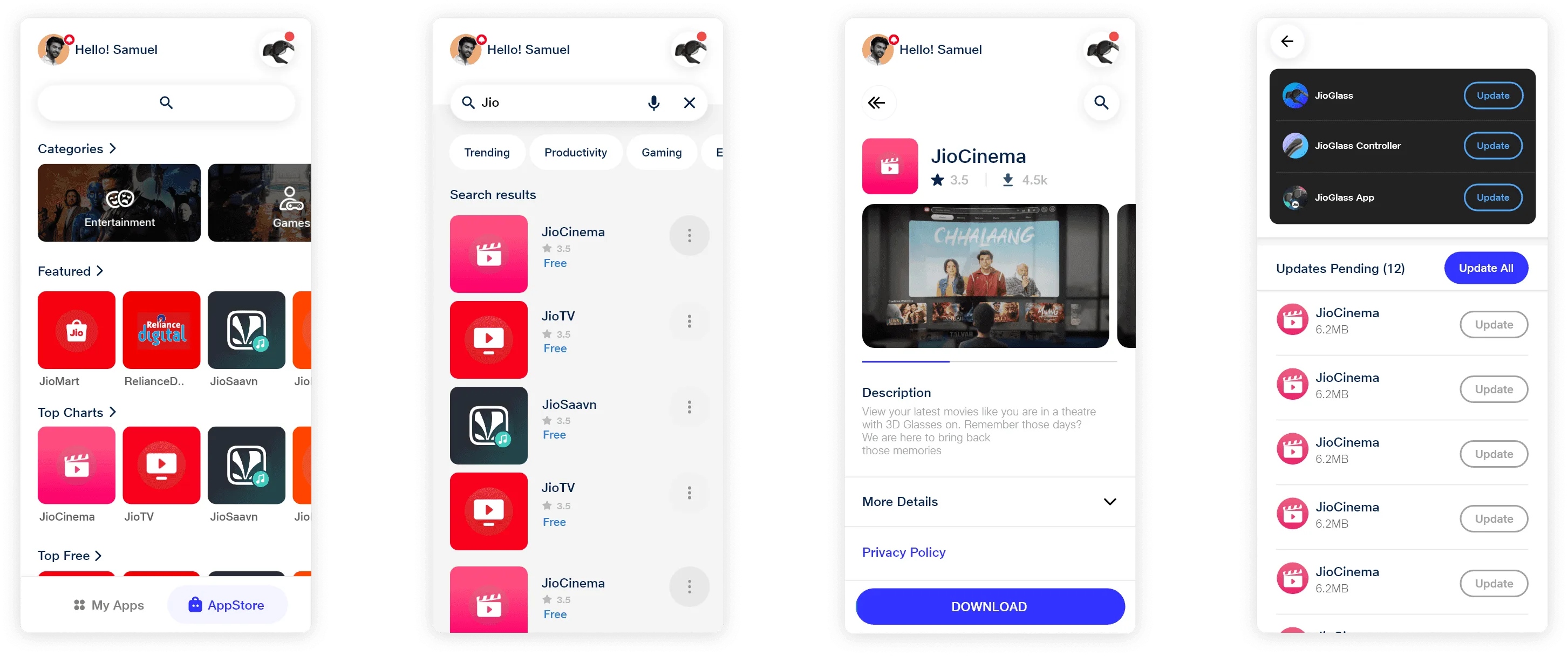
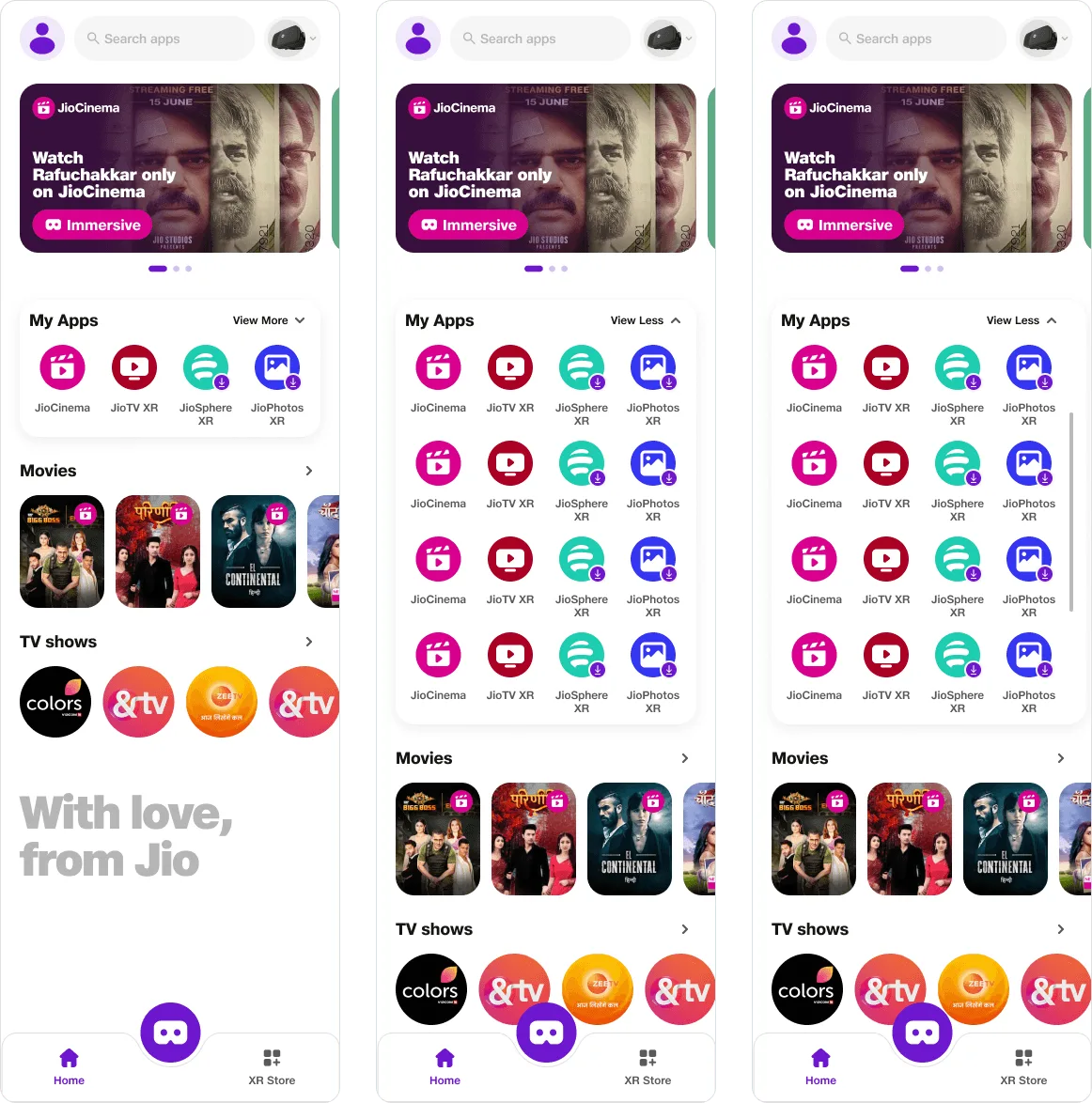
- Dual app drawer: separate sections for MR and native mobile apps.
- Integrated app store: MR content without leaving the app.
- Help and support: troubleshooting guides and tutorials.
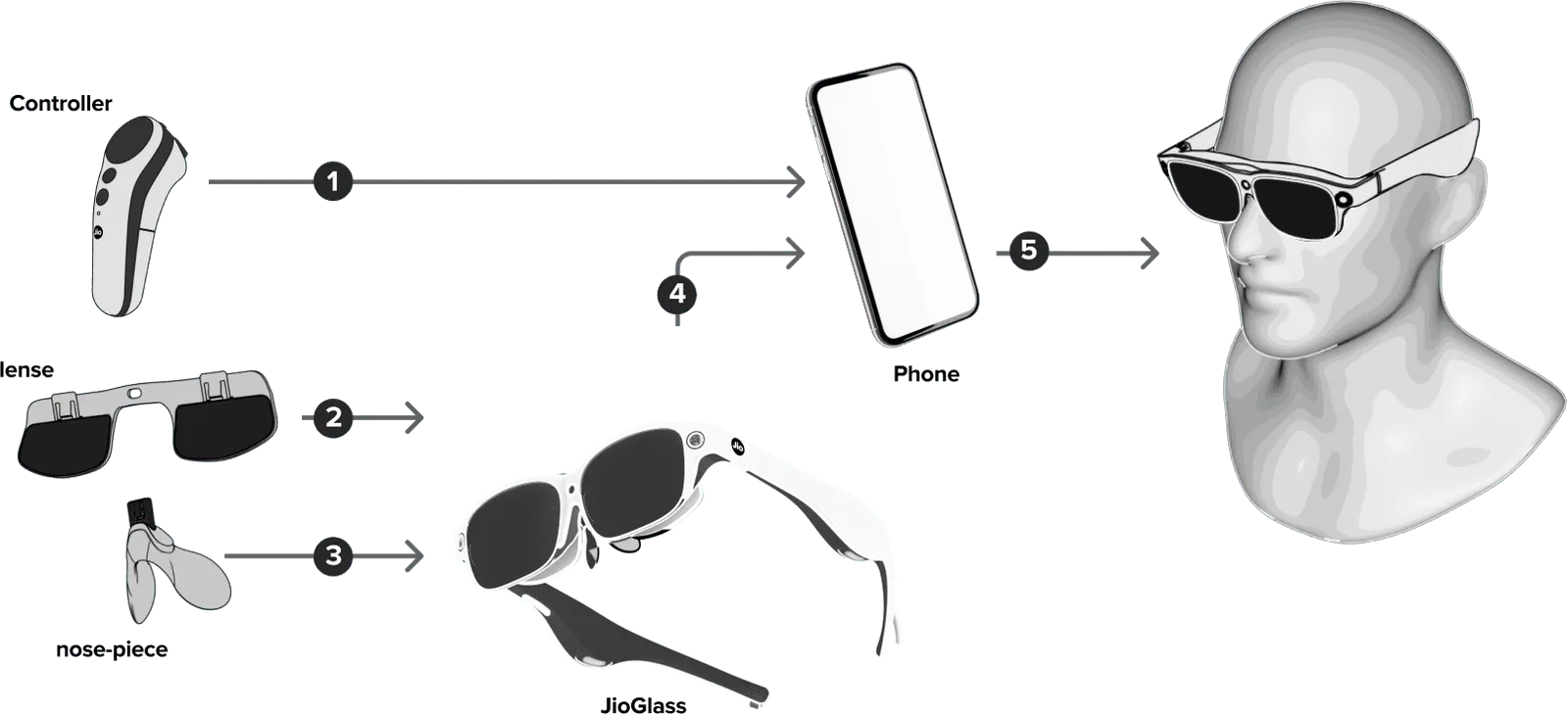
I also worked with the hardware team on the assembly sequence. The controller was the hardest part, so while they worked on a long term fix, the app gave clear visual cues for pairing.
Flows, IA and wireframes
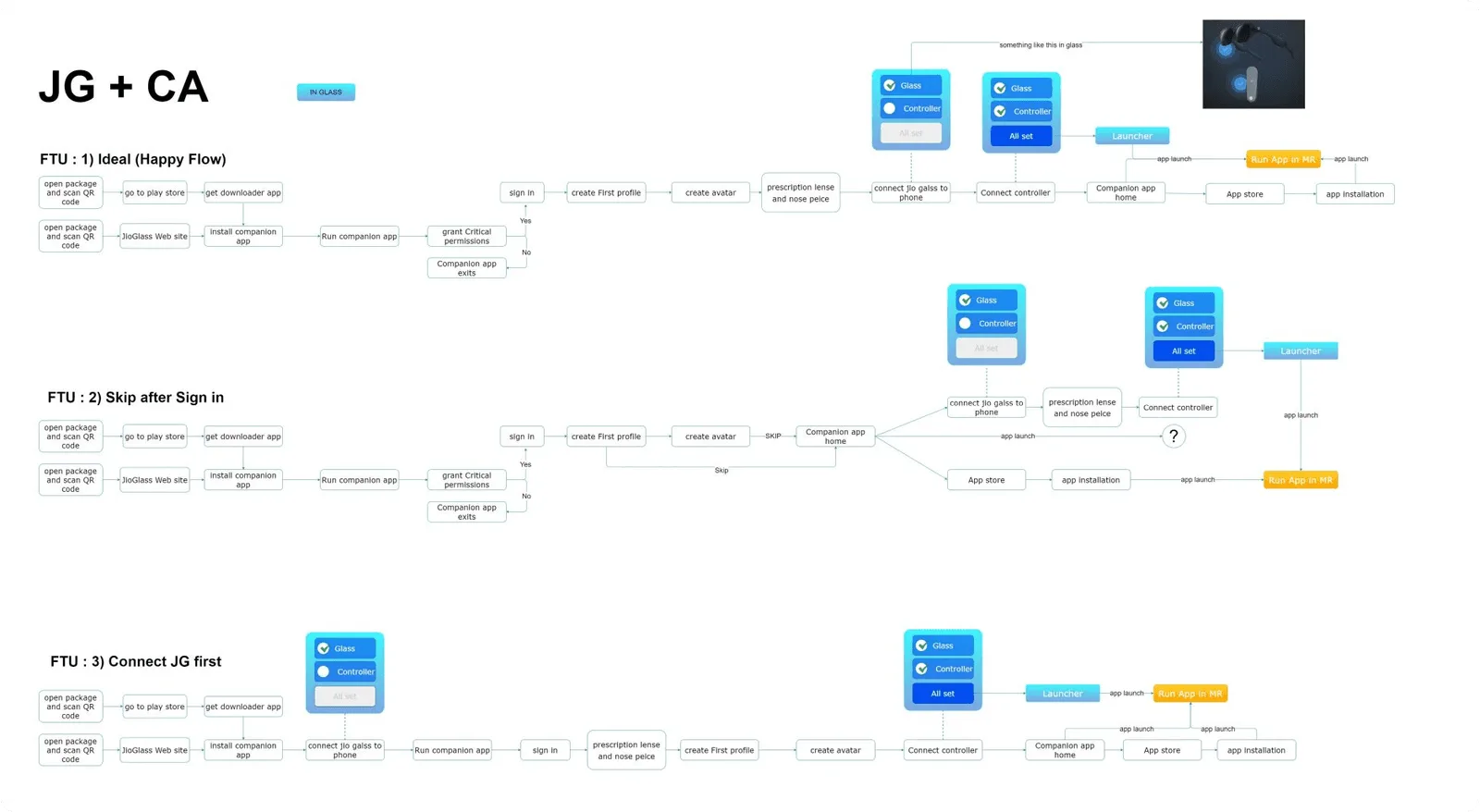
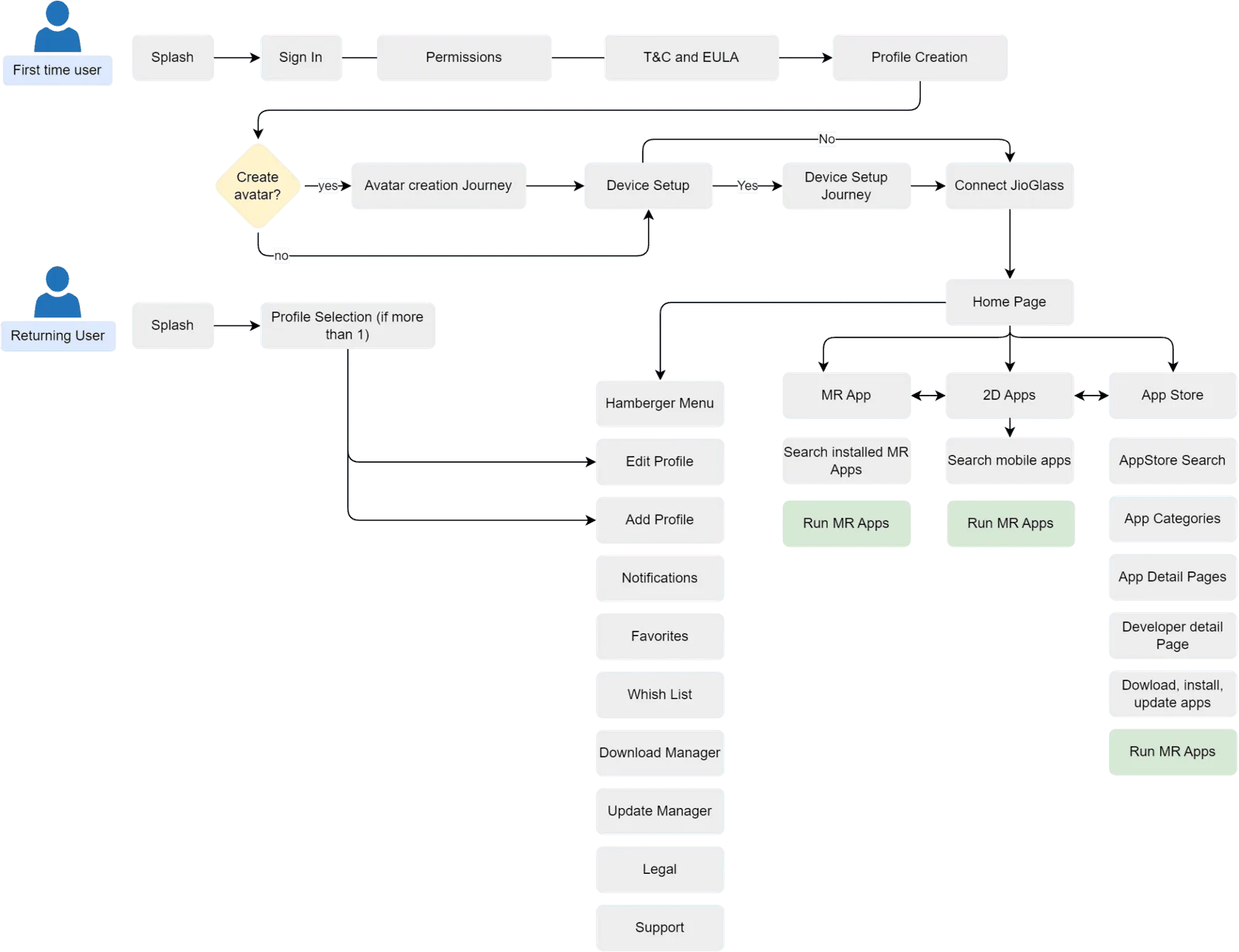
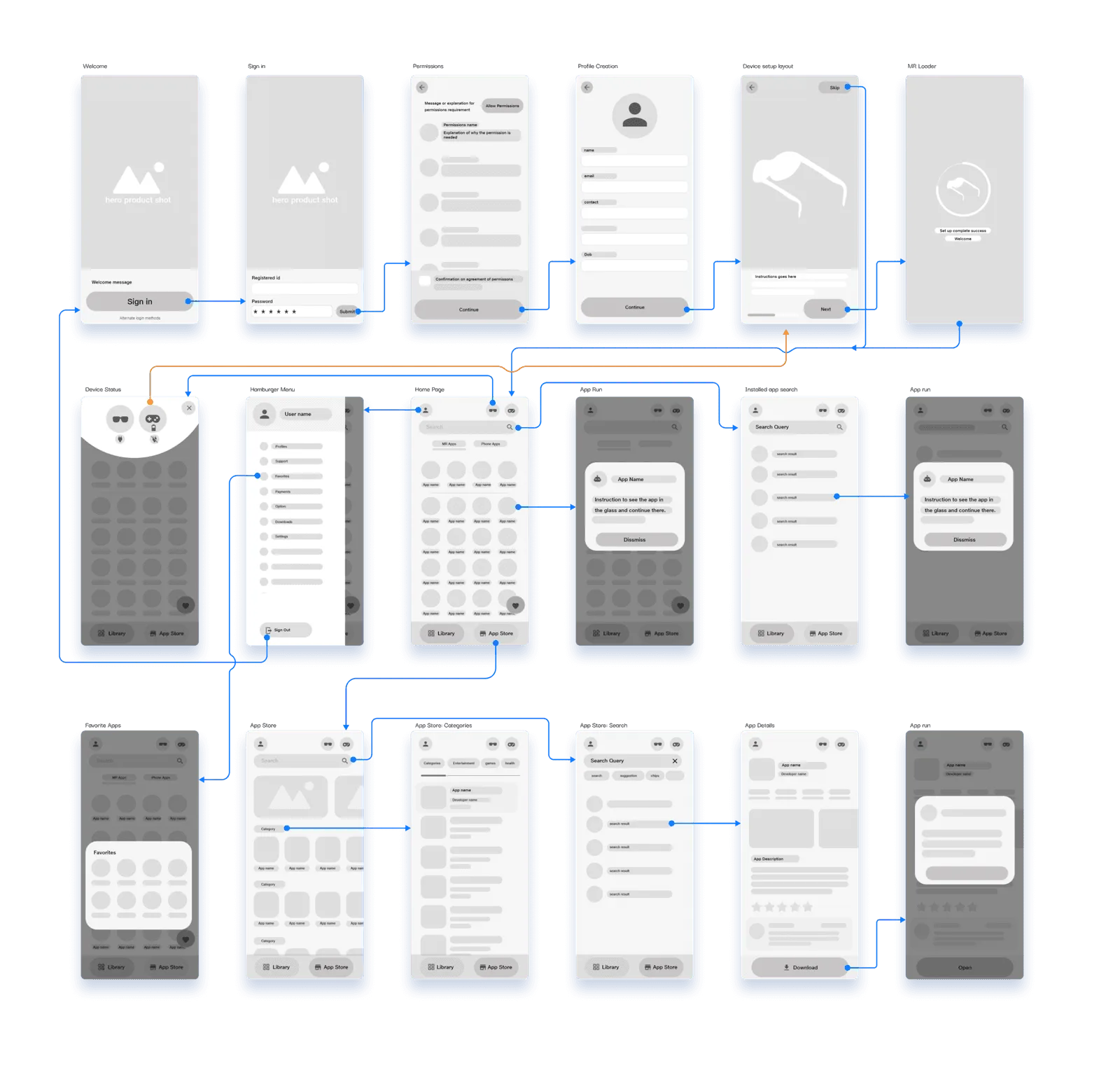
This was different from a normal app. The flows ran from unboxing to assembly, use, shutting down and storing the device in its case, and went through many iterations. I defined the information architecture before design, with the head of engineering, so the design and engineering architecture matched. Wireframes had two goals: cover all main happy flows for a testable MVP, and use familiar patterns, since novel interactions could cause drop offs.
A design system that could keep up
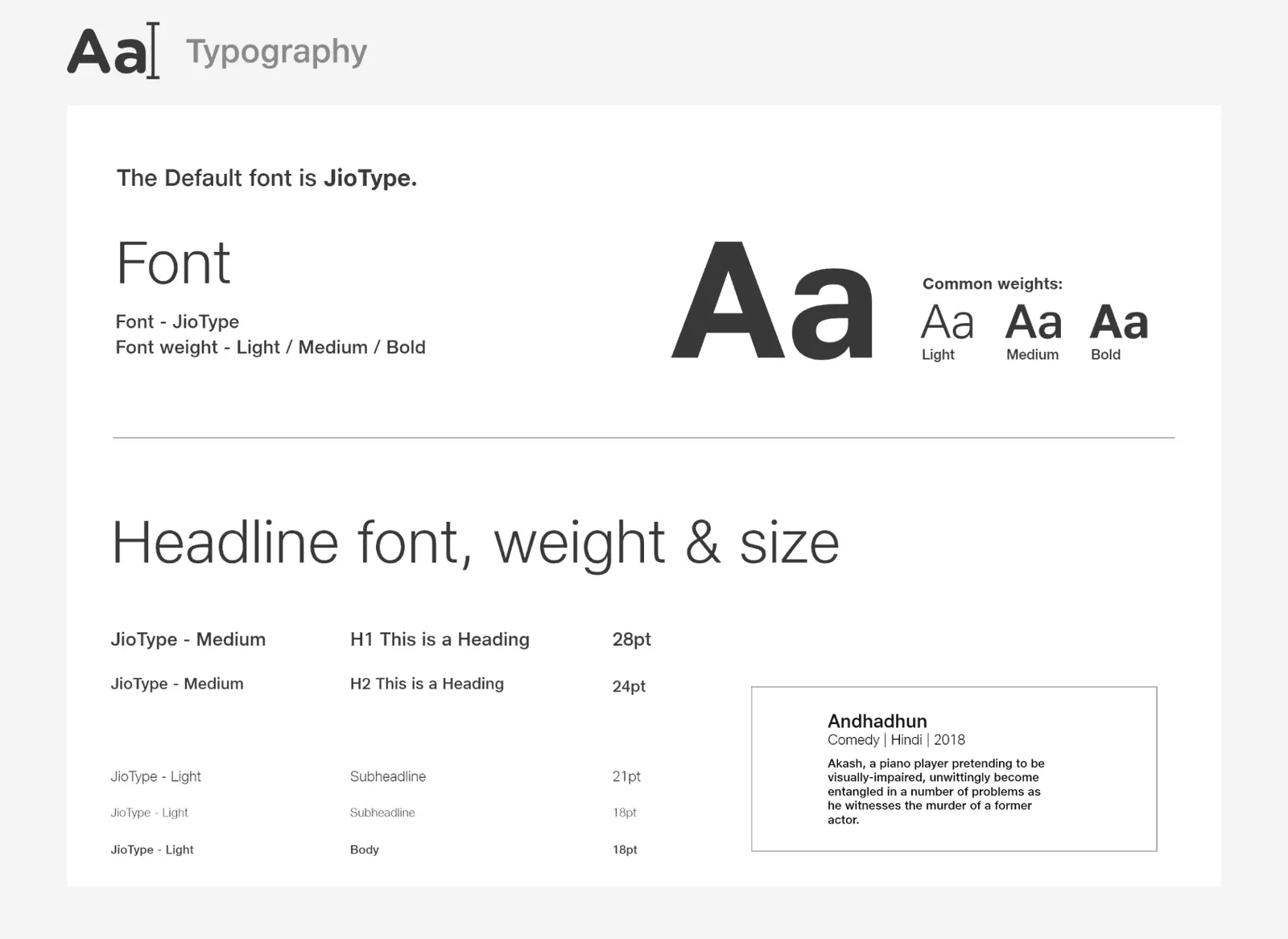
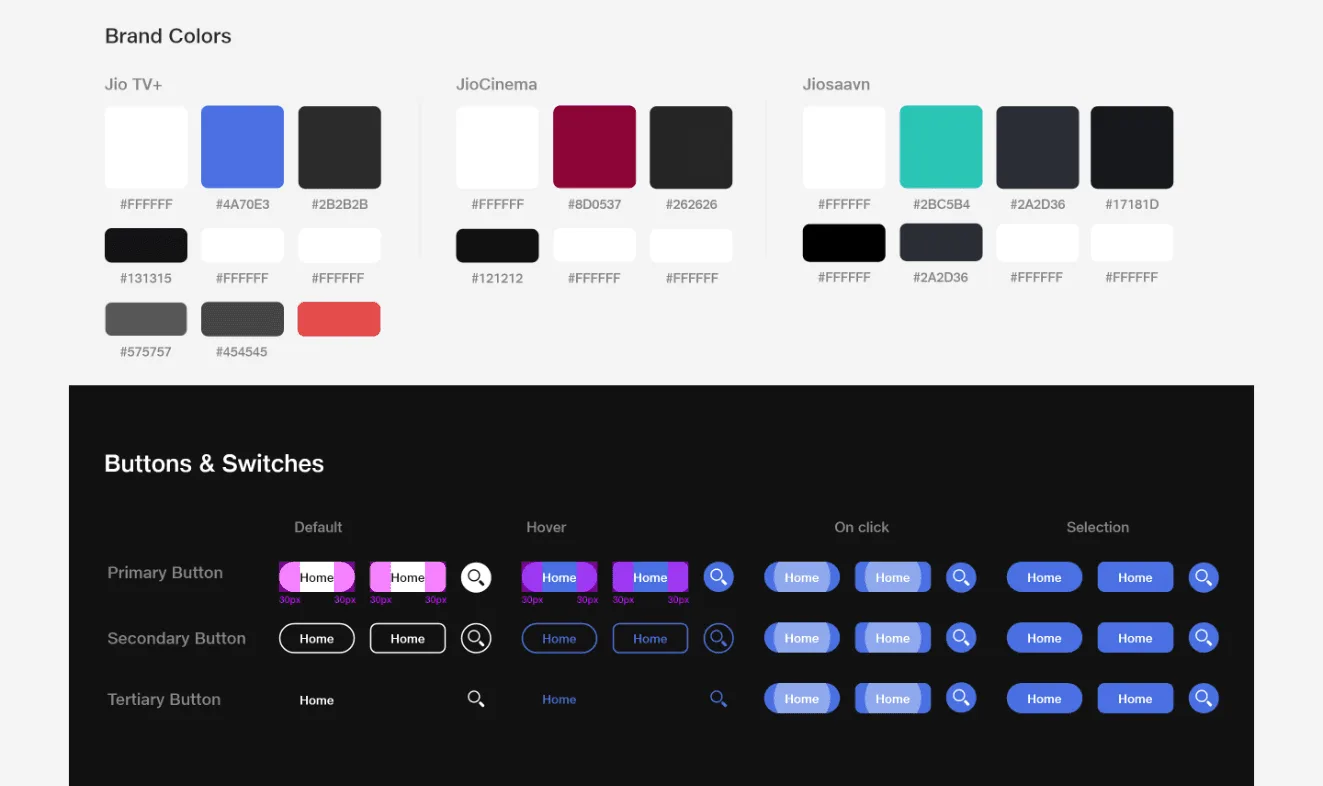
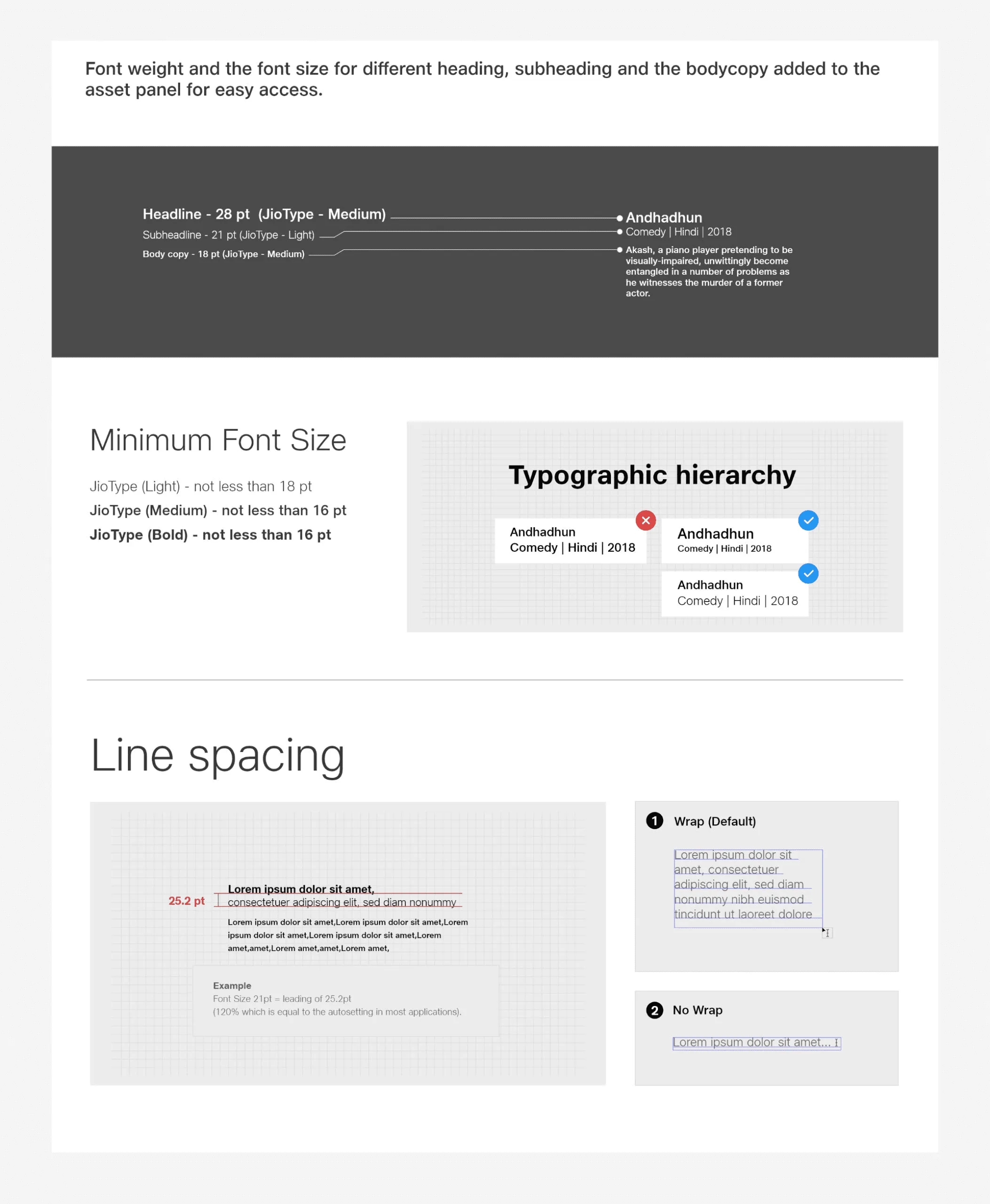
Jio's own design system was being overhauled, so we built an atomic design system and kept updating it as Jio's foundations changed.
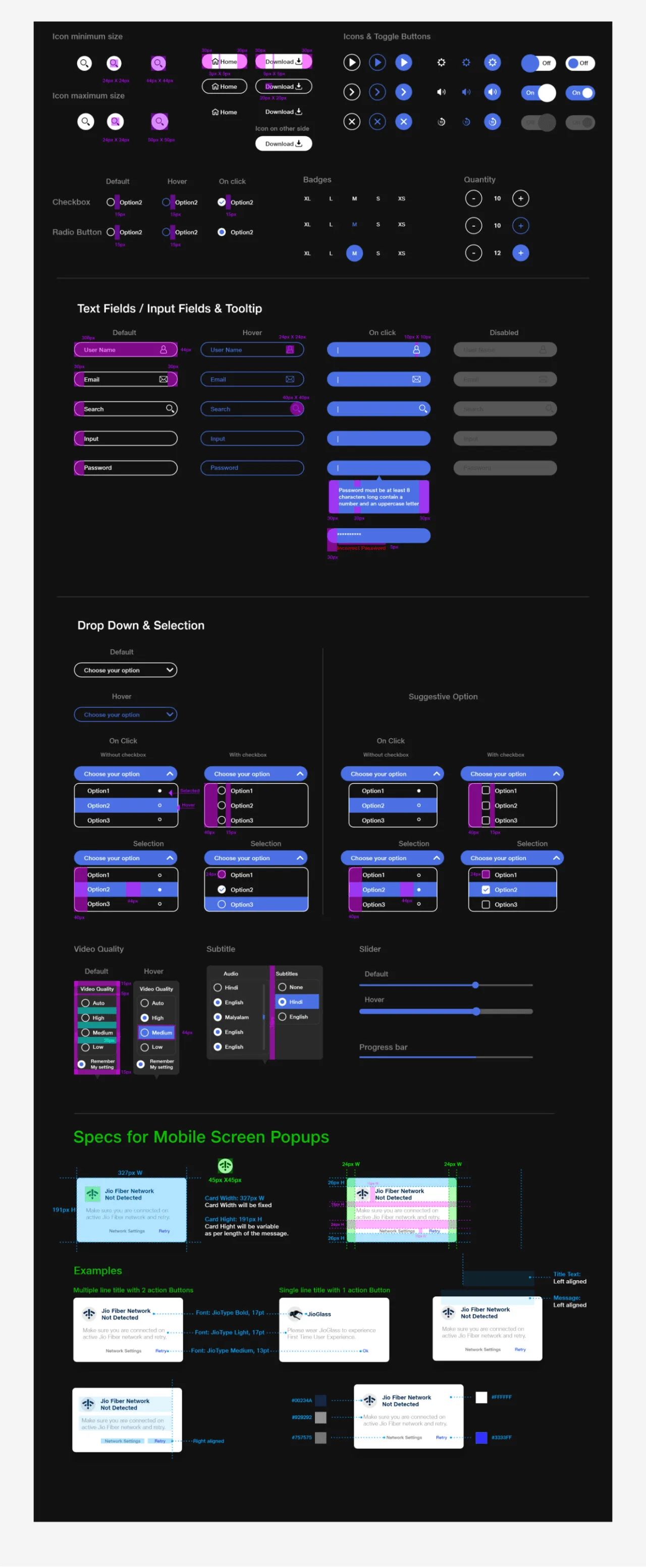
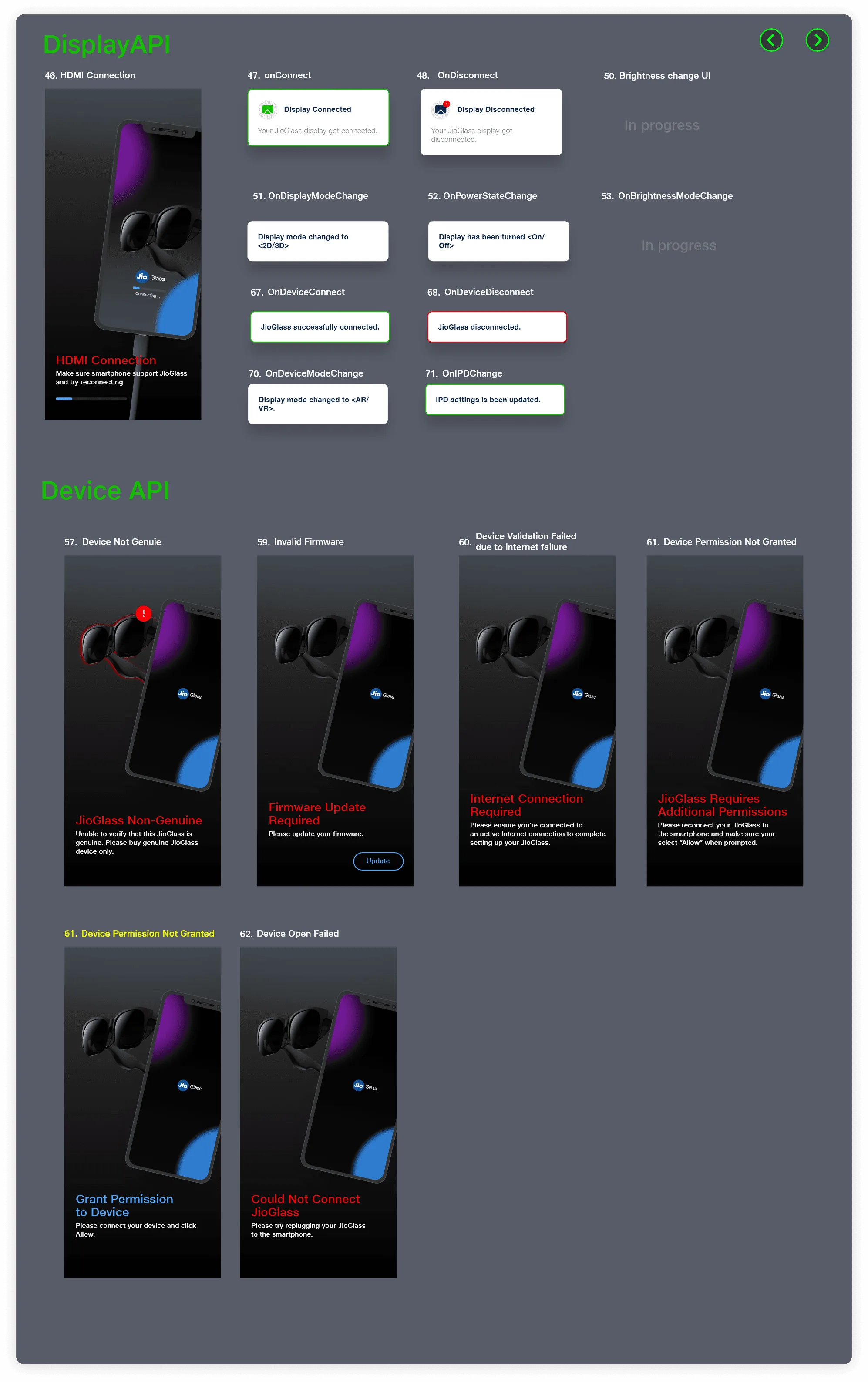
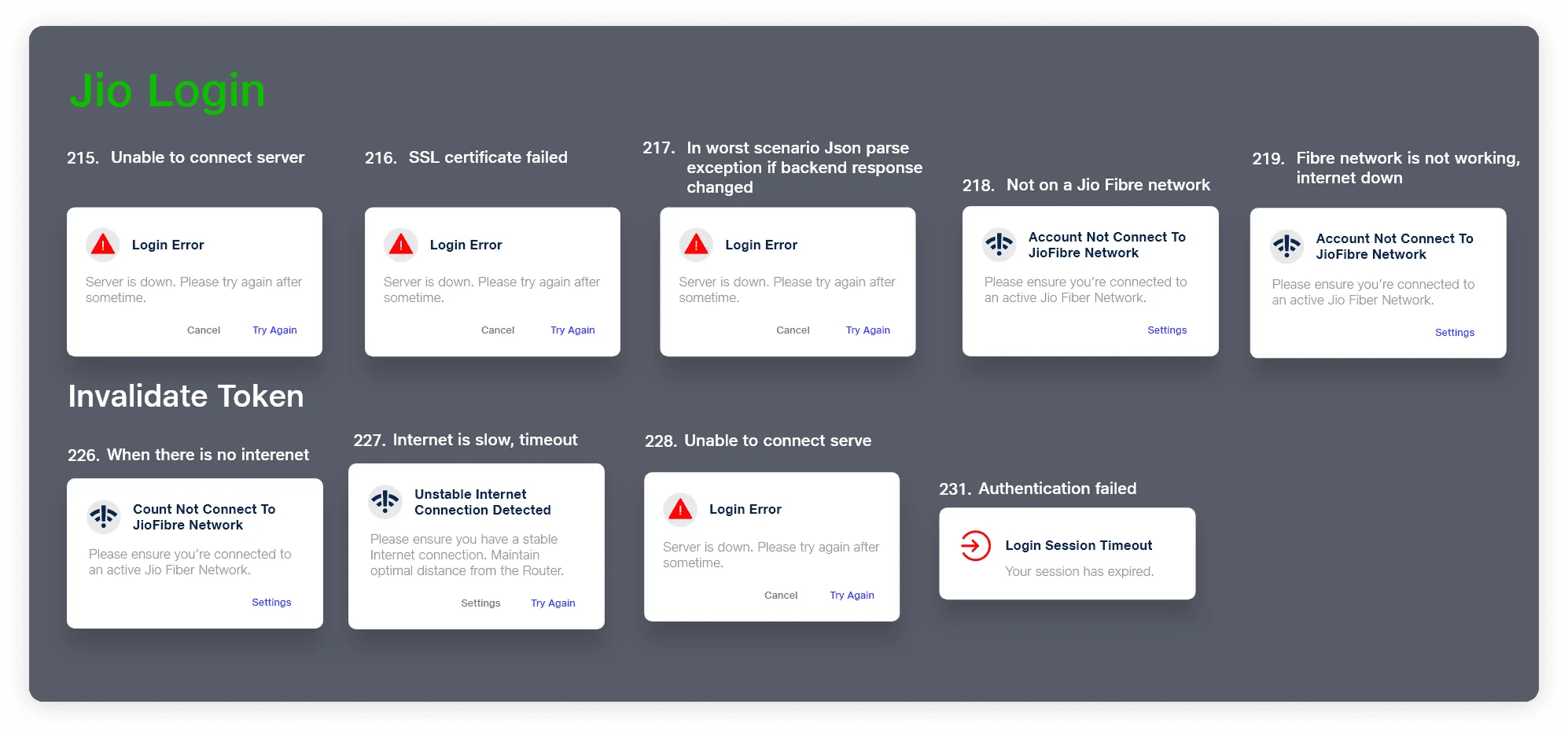
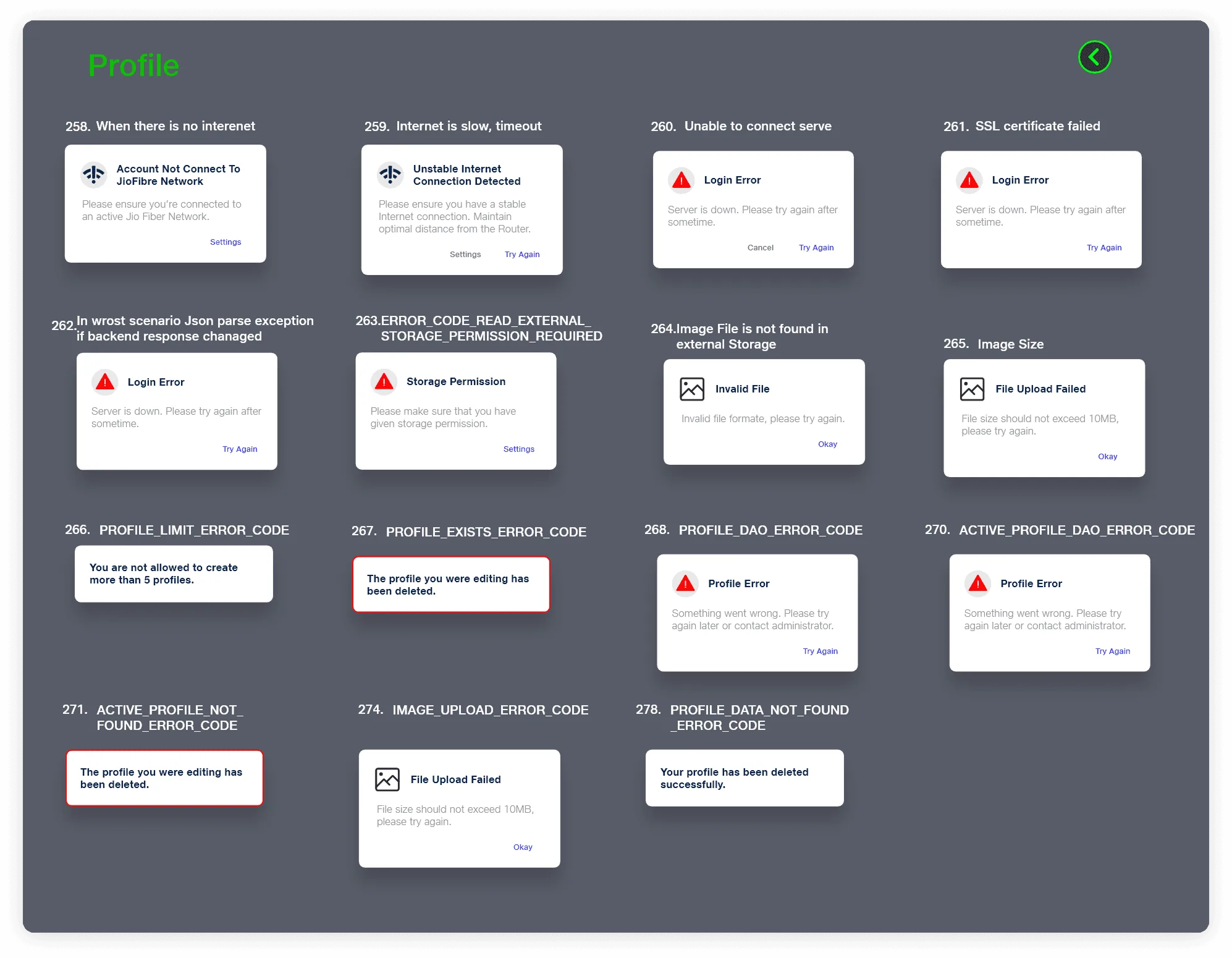
High fidelity design
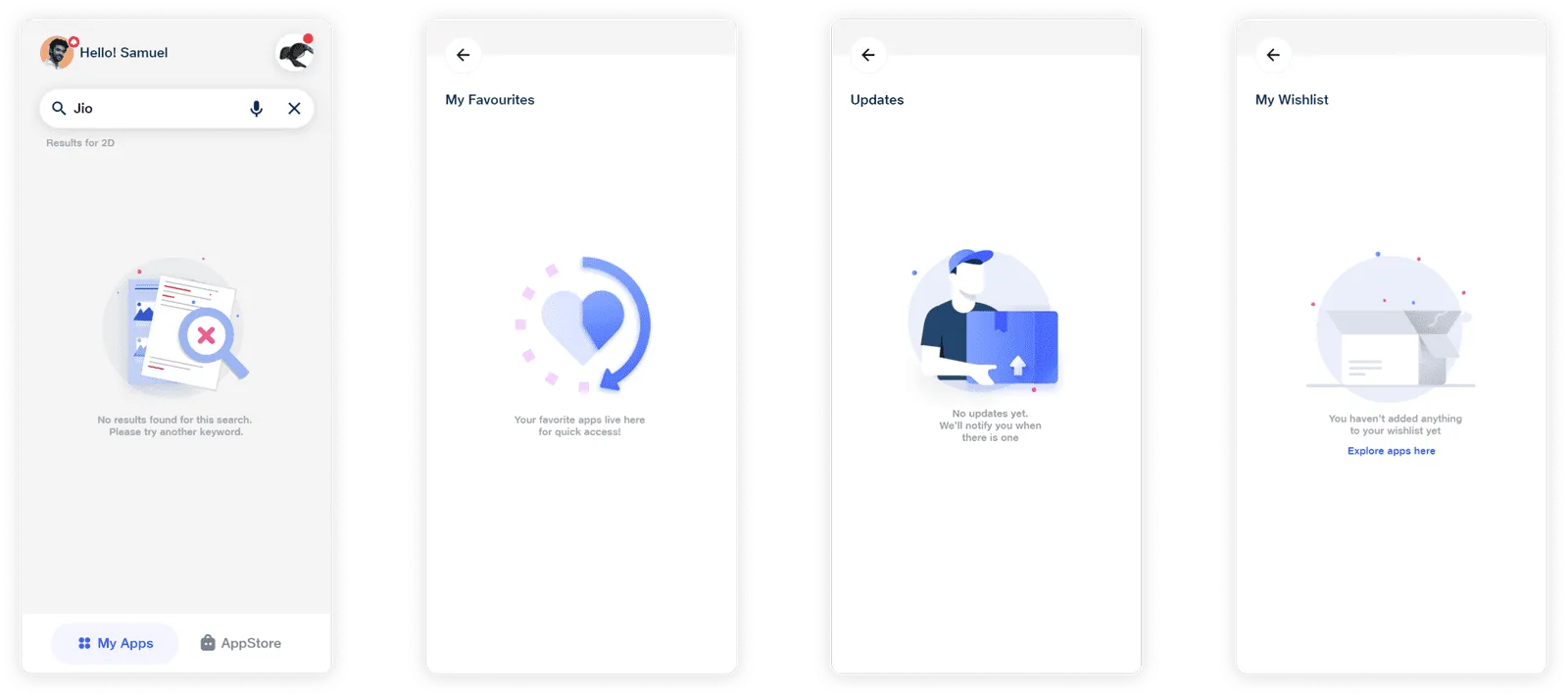
I designed happy flows first, then loading states, empty states, negative flows and error pop ups. Handoff used interactive Adobe XD prototypes and detailed documentation.
Phase 2: one app, two devices
The ecosystem grew to include a VR headset that used the phone to render. The app had to support both devices as one platform, JioImmerse. Three problems stood out:
- Performance: phone based VR made mid range phones overheat, lag and drain battery. With developers, we added device checks that tuned rendering automatically, a battery saving mode, and alerts for overheating or low battery. I also slimmed the token and component libraries for Android, iOS and Unity, moved GIF and WEBM animations to optimised Lotties, and rebuilt complex components as light layers over Material and UIKit.
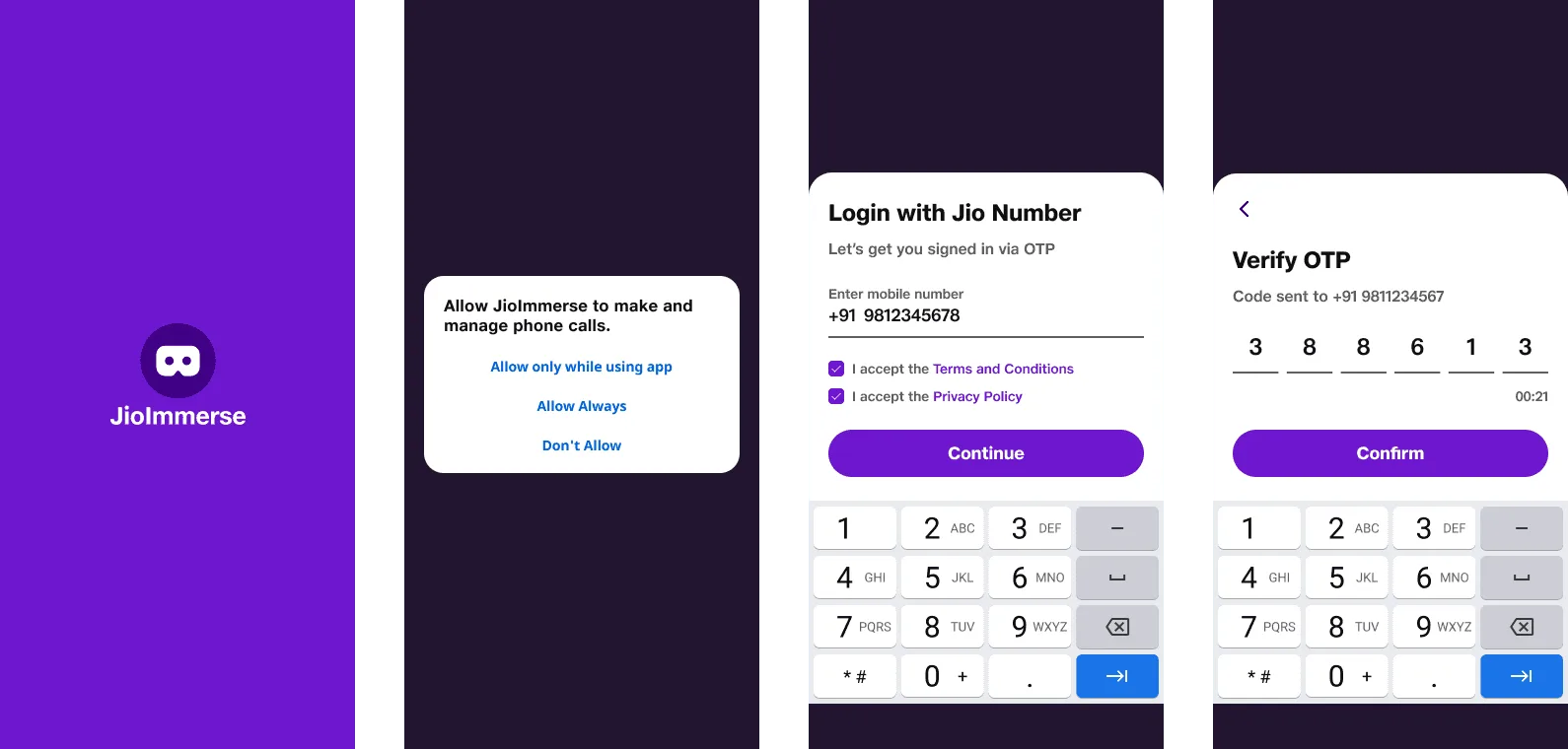
- Two devices, one experience: a single onboarding flow starts with device selection, then adapts: JioGlass users pair the controller, headset users learn to insert their phone. Each device gets its own home and app store. The SDK let developers ship one build for both devices, and for Android and iOS.
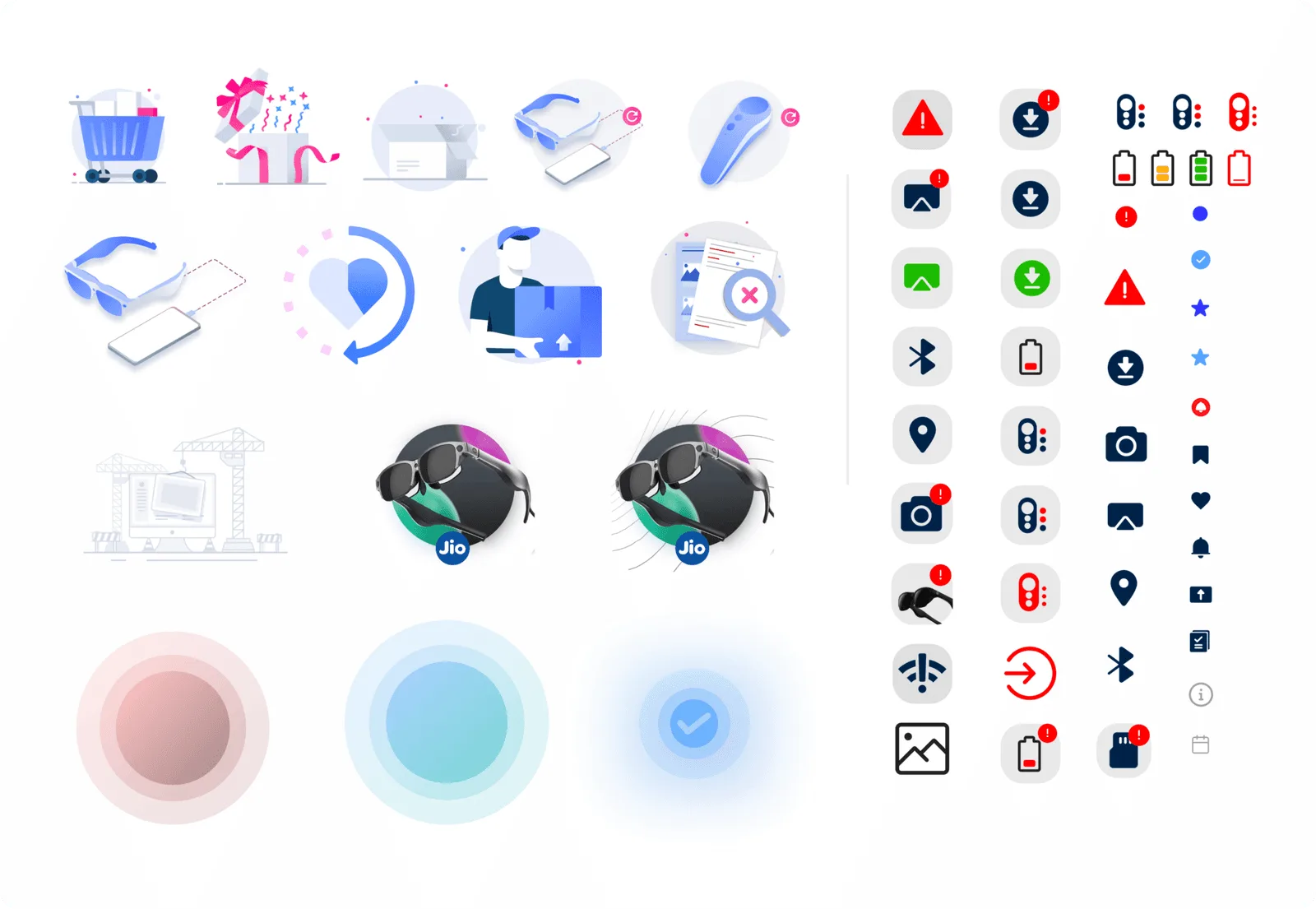
- Rebrand: a new visual identity aligned with Jio's updated brand guidelines. We moved to Figma, built tokens as a library for Android and iOS, and added custom illustrations and a happier visual language.
Testing before launch
We planned the public launch for IPL 2023 with only 8 weeks to an MVP. To test fast, we gave 200 headsets to people at a stall outside our office and ran a beta a month before launch, during the Women's Premier League, so conditions matched the real launch.
Impact
- Delivered the MVP for user trials and stakeholder demos (phase 1).
- One design system across app, hardware, packaging and marketing.
- JioGlass and the VR headset unified under JioImmerse.
- Over 500k users across Android and iOS.
- Average MAU of over 63% from March 2023 to January 2024.
Send a connection request with a short note about what you’re working on.
Connect on LinkedInGitHub